 The Lemon Index
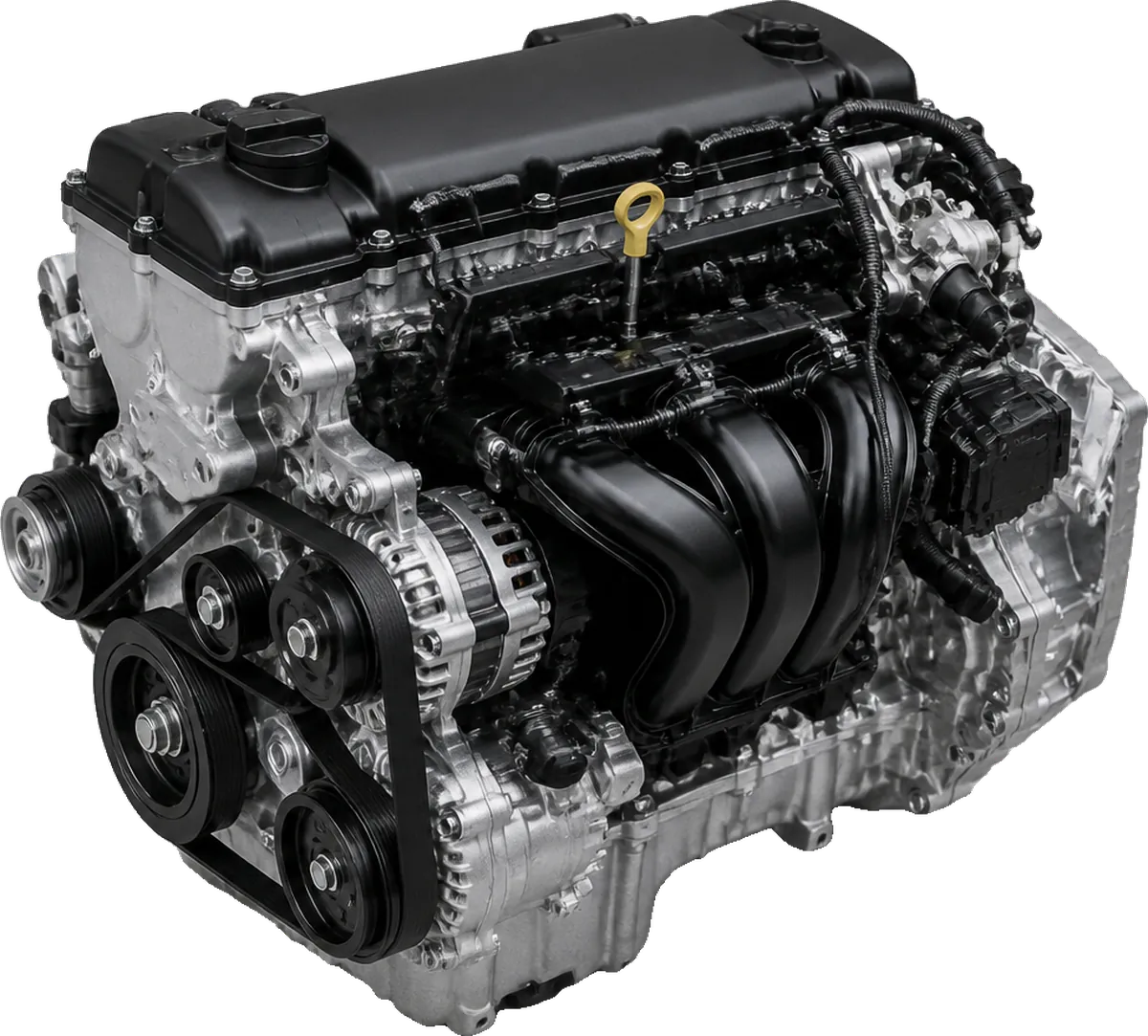
The 2.5 L inline-4, hybrid in the Toyota RAV4, Toyota Camry, Toyota Avalon and Lexus ES, model years 2012–2025. Owners filed 1,923 complaints about cars with it (matched by VIN); 7% name the engine, #49 of the 51 everyday engines we track (1 = the most).
Known issues, checked against owner complaints
Problems owners of cars with this engine name much more often than owners of the other 50 everyday engines we track (at least 1.5× the median, and 10+ complaints):
- The hybrid battery and inverter. 63 of 1,923 owner complaints (3.3%) mention the hybrid battery, inverter or hybrid system, against a median of under 0.1% for the other 50 everyday engines we track.
Hybrid system failure resulting in vehicle not being drivable at all. Failure is due to corrosion from connector between high voltage harness into rear traction motor. Failure occurred 8,000 miles past warrantee cut-off (100,000) and will require weeks to months to fix 2/2 parts on backorder.
2021 owner · NHTSA complaint 11653460
Also often talked about, but not standing out in complaints to NHTSA: oil consumption (2 of 1,923, 0.1%, peers 0.4%). That doesn't mean it never happens, only that owners rarely file it with the government.
What YouTube owners say
Average owner tone 54/100 across 14 model years, from 174 videos about this engine and its cars (#100 of 409 engines with a YouTube study).
Most-watched videos
- Reviewing my First Car: Toyota Camry Hybrid! 1,535,169 views
- Two Year Review // Do I still LOVE my RAV4? // 2020 RAV4 XSE Hybrid Review // Best Compact SUV 1,004,284 views
- Should you buy a Toyota Camry Hybrid? 1 Year Ownership Update 970,191 views
- Honda CR-V Hybrid vs. Toyota RAV4 Hybrid vs. Mazda CX-50 Hybrid | Small Hybrid SUV Comparison Test 737,011 views
- Toyota Camry Hybrid - Luxury package with amazing fuel efficiency. 540,986 views
Counted from video titles and captions: praise words against trouble words, weighted by views. Videos only count when the title names this engine or a car that had only this engine in those years.
Cars with this engine Tap a year for that car's full report.
- Toyota Camry20122013201420152016201720182019202020212022202320242025
- Lexus ES20132014201520162018201920202021202220232024
- Toyota RAV42016201720182019202020212022202320242025
- Toyota Avalon2013201420152016201920202021
Model years from NHTSA VIN decoding of owner complaints. Only years we have a car page for.
Owner complaints by model year
How to read this chart
Counts of complaints filed so far. Older cars have had longer to collect them, and popular cars draw more because more were sold: no one reports sales by engine, so there's no per-car rate. Compare the shares below instead.
By car
| Car | Model years matched | Complaints | Name the engine |
|---|---|---|---|
| Toyota RAV4 | 2016–25 | 1,091 | 7% |
| Toyota Camry | 2012–25 | 575 | 7% |
| Toyota Avalon | 2013–21 | 152 | 6% |
| Lexus ES | 2013–24 | 105 | 8% |
“Name the engine” = the share of that car's VIN-matched complaints that list the engine as a problem area.
What owners complain about
Share of this engine's complaints that name each area (one complaint can name several).
What owners write
| Complaints that | Count | Share | Median, other everyday engines |
|---|---|---|---|
| Say the engine stalled, shut off or lost power | 111 | 5.8% | 13% |
| Mention the hybrid battery, inverter or hybrid system | 63 | 3.3% | under 0.1% |
| Mention fire, flames or smoke | 51 | 2.7% | 3.3% |
| Mention coolant loss or overheating | 22 | 1.1% | 1.3% |
| Say the engine knocked, seized or failed | 19 | 1.0% | 2.7% |
Counted from the owner's own words in each complaint (all of the car, not only the engine). A share, not a failure rate.
When problems show up
Half of the owners who gave a mileage reported the problem between 750 and 30,000 miles; the middle report was at 6,400 miles (768 complaints with a mileage).
Recalls that name this engine
25V869000 Dec 2025 Hybrid Propulsion System Camry 2025
Toyota Motor Engineering & Manufacturing (Toyota) is recalling certain 2025-2026 Camry Hybrid and 2026 Corolla Cross Hybrid vehicles. A bolt inside the inverter may not have been tightened properly, causing incomplete contact at the inverter terminal.
Fix. Dealers will replace the inverter assembly, free of charge. Owner letters were mailed July 23, 2026. Owners may contact Toyota customer service at 1-800-331-4331. Toyota's number for this recall is 25TB15/25TA15.
20V064000 Feb 2020 Engine And Engine Cooling Camry 2020; RAV4 2019, 2020
Toyota Motor Engineering & Manufacturing (Toyota) is recalling certain 2020 Toyota Avalon Hybrid, Camry, Camry Hybrid and Lexus ES300h and 2019-2020 RAV4 and RAV4 Hybrid vehicles equipped with 2.5L 4-Cylinder engines. Porosity in the engine castings may result in cracks than can allow coolant to leak internally and/or externally.
Fix. Toyota will notify owners, and dealers will inspect and replace the engine including the engine block, as necessary, free of charge. The recall began April 3, 2020. Owners may contact Toyota customer service at 1-888-270-9371 or Lexus at 1-800-255-3987. Toyota's number for this recall is 20TA04. Lexus' number for this recall is 20LA02.
NHTSA recalls on these cars and model years whose text names this engine (its size or name). The rest (brakes, air bags, wiring ...) are on each car year's page.
In owners' words
The seat has pooping cracking and it feels like it’s shifting. It’s a horrible feeling and is not going away
2025 owner · NHTSA complaint 11776879
Driver and passenger seat do no appear to be perfectly secure at all times. Additionally the center console also does not appear to be secure and makes cranking noises.
2025 owner · NHTSA complaint 11776149
I had my front bumper cover on my Toyota Camry repaired and it continues to pop out and I am told it's the clips for the bumper.
2025 owner · NHTSA complaint 11774095
Against the other everyday engines
| Engine | Years | Complaints | Name the engine | Stalled or lost power | Burning oil | Recalls naming it |
|---|---|---|---|---|---|---|
| 1.5 EcoBoost | 2014–25 | 5,627 | 66% | 15% | 0.2% | 2 |
| 6.2 V8 (Gen V) | 2014–25 | 7,233 | 65% | 24% | 2.2% | 2 |
| Skyactiv-G 2.5T | 2016–25 | 632 | 56% | 8.4% | 9.0% | 0 |
| 2.4 Theta II | 2010–22 | 21,564 | 51% | 20% | 8.1% | 8 |
| 2.4 Ecotec | 2010–17 | 6,098 | 51% | 21% | 18% | 0 |
| 3.0 EcoDiesel | 2014–23 | 2,874 | 50% | 24% | 0.2% | 7 |
| 3.3 Lambda II | 2013–21 | 3,258 | 50% | 17% | 5.9% | 2 |
| 2.0 EcoBoost | 2012–25 | 9,748 | 48% | 12% | 0.1% | 0 |
| 2.0T Theta II | 2011–22 | 3,327 | 44% | 18% | 4.7% | 2 |
| M57 diesel | 2009–13 | 316 | 40% | 16% | 0.3% | 4 |
| 1.4 Turbo | 2011–22 | 3,928 | 39% | 17% | 0.9% | 2 |
| 2.0 diesel | 2014–18 | 223 | 37% | 24% | under 0.1% | 2 |
| 2.4 Tigershark | 2014–22 | 9,634 | 35% | 34% | 4.5% | 5 |
| i-FORCE MAX | 2022–25 | 307 | 34% | 15% | under 0.1% | 0 |
| 1.5 Turbo | 2016–25 | 4,477 | 33% | 27% | 0.3% | 1 |
| EA888 2.0T | 2009–25 | 7,455 | 29% | 16% | 3.6% | 5 |
| A25A | 2018–25 | 2,988 | 26% | 12% | under 0.1% | 1 |
| 3.8 V6 (G6DA / G6DJ) | 2006–16 | 2,098 | 26% | 16% | 0.6% | 0 |
| 1.5 Turbo | 2017–22 | 8,078 | 25% | 13% | 0.2% | 0 |
| J35 V6 | 2003–25 | 24,081 | 24% | 14% | 0.9% | 4 |
| Skyactiv-G 2.5 | 2014–25 | 2,634 | 22% | 11% | 2.7% | 1 |
| 2.7 Turbo | 2019–25 | 1,098 | 22% | 12% | 0.5% | 0 |
| 2AZ-FE | 2001–09 | 7,176 | 22% | 3.7% | 8.6% | 0 |
| 3.0 TFSI | 2009–19 | 693 | 22% | 6.6% | 6.5% | 0 |
| 5.4 Triton | 2005–14 | 3,952 | 21% | 15% | 0.1% | 3 |
| 5.7 HEMI | 2003–24 | 23,907 | 19% | 23% | 0.1% | 6 |
| QR25DE | 2002–20 | 16,167 | 19% | 14% | 1.5% | 4 |
| 5.3 V8 (Gen V) | 2014–25 | 13,198 | 18% | 13% | 0.5% | 3 |
| 3.6 Pentastar | 2011–25 | 34,649 | 18% | 16% | 0.4% | 9 |
| 6.0 Two-Mode Hybrid | 2009–12 | 113 | 18% | 18% | under 0.1% | 0 |
| 2.3 EcoBoost | 2015–25 | 3,983 | 16% | 9.9% | 0.1% | 12 |
| 3.8 Lambda II | 2020–25 | 4,433 | 16% | 8.0% | 5.6% | 0 |
| 2.0 hybrid | 2014–25 | 2,261 | 16% | 10% | under 0.1% | 3 |
| FB20 | 2012–25 | 2,336 | 15% | 8.2% | 1.7% | 0 |
| 3.6 V6 | 2009–23 | 14,218 | 14% | 14% | 0.1% | 1 |
| K24 | 2002–19 | 15,084 | 14% | 5.1% | 1.6% | 0 |
| 2GR-FKS | 2016–24 | 3,775 | 12% | 11% | 0.2% | 2 |
| 3.5 Cyclone V6 | 2007–19 | 21,316 | 12% | 11% | 0.1% | 0 |
| VQ35 V6 | 2002–25 | 12,617 | 12% | 11% | 0.2% | 1 |
| 3UR-FE | 2007–21 | 1,378 | 12% | 8.8% | 0.4% | 0 |
| 4.6 V8 | 2000–11 | 8,651 | 12% | 6.9% | under 0.1% | 3 |
| FB25 | 2011–25 | 9,863 | 11% | 6.2% | 1.5% | 0 |
| 2AR-FE | 2009–18 | 4,675 | 11% | 6.6% | 1.3% | 1 |
| 2GR-FE | 2005–18 | 8,682 | 10% | 3.5% | 0.3% | 0 |
| 2.0 hybrid | 2013–20 | 995 | 10% | 12% | 0.1% | 0 |
| 3.8 V6 | 2007–11 | 7,877 | 9% | 17% | 0.5% | 0 |
| 5.3 V8 (Gen IV) | 2007–14 | 9,241 | 8% | 4.5% | 1.3% | 0 |
| 1GR-FE | 2003–24 | 5,757 | 7% | 4.0% | under 0.1% | 0 |
| 2.5 hybrid | 2012–25 | 1,923 | 7% | 5.8% | 0.1% | 2 |
| 4.8 V8 | 2007–13 | 726 | 6% | 4.8% | 0.1% | 0 |
| 2.3 Duratec | 2001–11 | 639 | 4% | 2.5% | under 0.1% | 0 |
Shares of each engine's own complaints, matched by VIN. They show what owners complain about, not how often engines break.
Quick answers
Is the Toyota 2.5 hybrid (2AR-FXE / A25A-FXS) reliable?
No one reports sales by engine, so there's no per-car score. Of the 1,923 complaints owners filed about cars with it, 7% name the engine, #49 of the 51 everyday engines we track (1 = the most). 63 (3.3%) mention the hybrid battery, inverter or hybrid system, against under 0.1% for the other engines.
What cars have the Toyota 2.5 hybrid (2AR-FXE / A25A-FXS)?
In our data: the Toyota RAV4, Toyota Camry, Toyota Avalon and Lexus ES, model years 2012–2025, matched by the VIN in each owner complaint.
What are the most common 2.5 hybrid problems?
In owner complaints to the government: fuel system, electrical, brakes.
How many recalls name the 2.5 hybrid?
2 NHTSA recalls on these cars name it.
Complaints: NHTSA owner complaints filed under each car's own NHTSA names (the same ones its car pages count), all years filed, one per complaint number. Engine: decoded from the complaint's VIN with NHTSA's vPIC decoder (displacement, cylinders, engine model, turbo, hybrid) and the engine maker's model years; a VIN that doesn't decode to exactly one engine is left out. Older cars have had more years to collect complaints, and popular cars draw more because more were sold. Source: NHTSA owner complaints (FLAT_CMPL + COMPLAINTS_RECEIVED_2025-2026), received through 20261115; engines: NHTSA vPIC VIN decoder (batch); NHTSA recalls API. Engine names and model years: Toyota.