 The Lemon Index
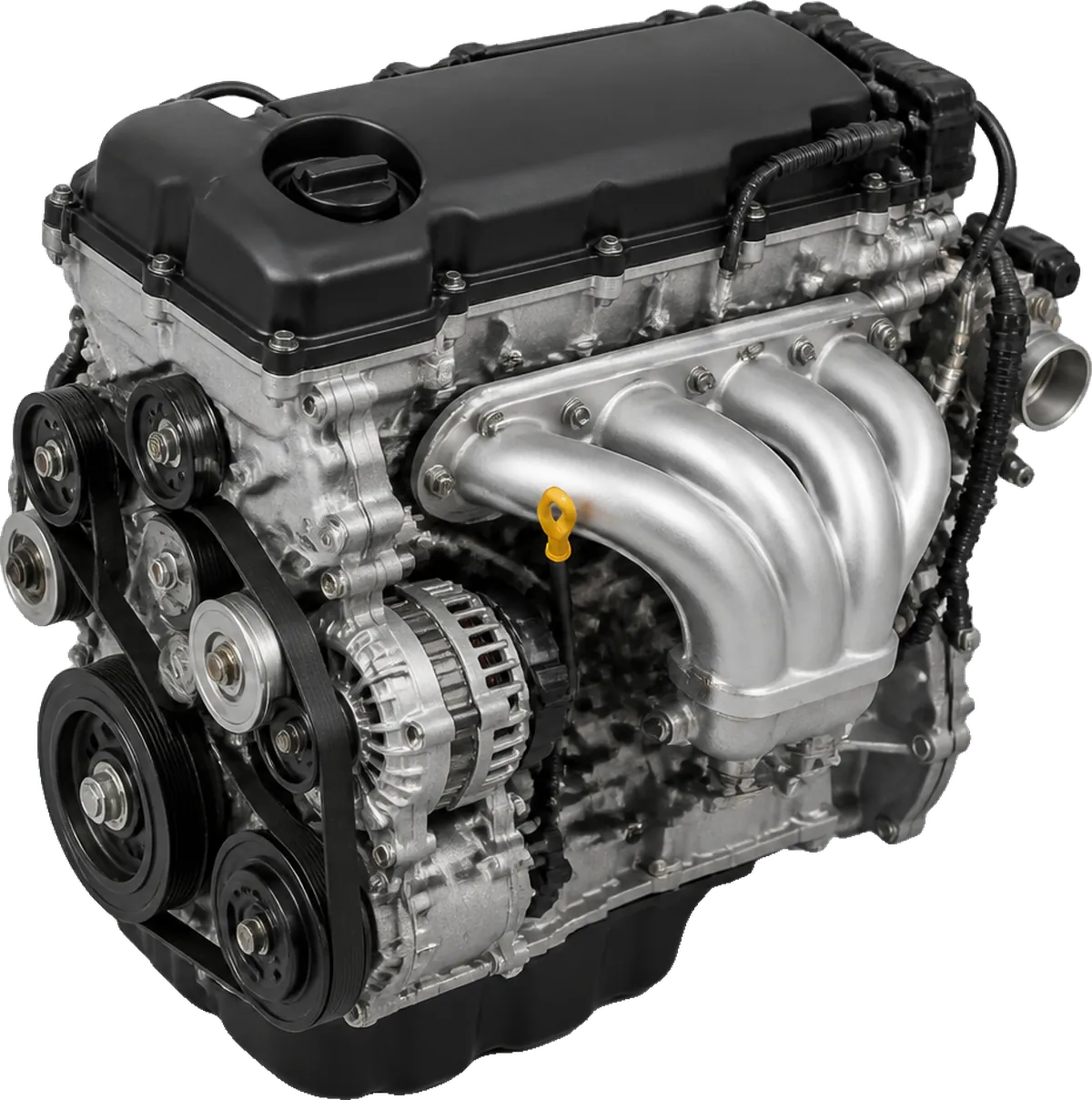
The 2.5 L inline-4 in the Toyota Camry and Toyota RAV4, model years 2009–2018. Owners filed 4,673 complaints about cars with it (matched by VIN); 11% name the engine, #34 of the 39 everyday engines we track (1 = the most).
Known issues, checked against owner complaints
Problems owners of cars with this engine name much more often than owners of the other 38 everyday engines we track (at least 1.5× the median, and 10+ complaints):
- Oil consumption. 63 of 4,673 owner complaints (1.3%) mention burning or losing oil, against a median of 0.5% for the other 38 everyday engines we track.
we have had multiple issues with this car since 70,000 miles. engine burning oil, no fix besides replacing it or keep adding oil. now check engine and check stability control system light are on. took to o'reilley to run codes and it threw all kinds of transmission codes.
2017 owner · NHTSA complaint 11740863
Also often talked about, but not standing out in complaints to NHTSA: water pump leaks (2 of 4,673, under 0.1%, peers 0.2%). That doesn't mean it never happens, only that owners rarely file it with the government.
What YouTube owners say Tone 0-100, higher = more praise than trouble.
Average owner tone 38/100 across 10 model years, from 115 videos about this engine and its cars (#154 of 165 engines with a YouTube study).
Most-watched videos
- Problems to Look Out for When Buying a Used Toyota RAV4 - All Generations 1,874,404 views
- Why Not to Buy a New Toyota Camry 1,777,431 views
- Here’s Why I’m Buying This Toyota RAV4 1,383,568 views
- Top 5 Problems Toyota RAV4 SUV 3rd Generation 2006-2012 947,855 views
- Common Toyota Rav4 Problems 872,606 views
Counted from video titles and captions: praise words against trouble words, weighted by views. Videos only count when the title names this engine or a car that had only this engine in those years.
Cars with this engine Tap a year for that car's full report.
Model years from NHTSA VIN decoding of owner complaints. Only years we have a car page for.
Owner complaints by model year
Counts of complaints filed so far. Older cars have had longer to collect them, and popular cars draw more because more were sold: no one reports sales by engine, so there's no per-car rate. Compare the shares below instead.
By car
| Car | Model years matched | Complaints | Name the engine |
|---|---|---|---|
| Toyota Camry | 2010–17 | 2,451 | 11% |
| Toyota RAV4 | 2009–18 | 2,222 | 12% |
“Name the engine” = the share of that car's VIN-matched complaints that list the engine as a problem area.
What owners complain about
Share of this engine's complaints that name each area (one complaint can name several).
What owners write
| Complaints that | Count | Share | Median, other everyday engines |
|---|---|---|---|
| Say the engine stalled, shut off or lost power | 310 | 6.6% | 14% |
| Mention fire, flames or smoke | 251 | 5.4% | 3.2% |
| Say the engine knocked, seized or failed | 80 | 1.7% | 2.9% |
| Mention burning or losing oil | 63 | 1.3% | 0.5% |
| Mention coolant loss or overheating | 21 | 0.4% | 1.2% |
| Mention an oil leak | 16 | 0.3% | 0.6% |
| Mention a spark plug | 6 | 0.1% | 0.5% |
Counted from the owner's own words in each complaint (all of the car, not only the engine). A share, not a failure rate.
When problems show up
Half of the owners who gave a mileage reported the problem between 9,000 and 74,000 miles; the middle report was at 36,100 miles (3,062 complaints with a mileage).
Recalls that name this engine 1
10V040000 Feb 2010 Service Brakes, Hydraulic Camry 2010
Toyota is recalling certain model year 2010 camrys. The length of the power steering pressure hose on vehicles equipped with the 4-cylinder (2ar-fe) engine may be insufficient, such that the gap between the crimp on the pressure hose and the brake tube for the left rear brake may be insufficient. Under these circumstances the brake tube may interfere with the crimp and may wear and then perforate.
Fix. Toyota will notify owners and, if necessary, dealers will replace or adjust the brake tube free of charge. The safety recall began on march 4, 2010. Owners may contact toyota at 1-800-331-4331.
NHTSA recalls on these cars and model years whose text names this engine (its size or name). The rest (brakes, air bags, wiring ...) are on each car year's page.
In owners' words
Rear tailights are subject to water infiltration, which has worsened over time. Inside of the lights will fog because they are retaining moisture. This could eventually lead to the brake lights not coming on.
2017 owner · NHTSA complaint 11775229
1- the stickiness of dashboard 2- the shiny/deflective surface of the dashboard creates as safety hazard.
2011 owner · NHTSA complaint 11766565
I was driving 9/3 and my left blinker light came on solid. I was not using my blinker. Within a few seconds my check engine light came on and another light. Then within 2 minutes the front left engine/tire caught fire.
2016 owner · NHTSA complaint 11761822
Against the other everyday engines
| Engine | Years | Complaints | Name the engine | Stalled or lost power | Burning oil | Recalls naming it |
|---|---|---|---|---|---|---|
| 1.5 EcoBoost | 2014–25 | 5,622 | 66% | 15% | 0.2% | 2 |
| 6.2 V8 (Gen V) | 2014–25 | 7,219 | 65% | 24% | 2.2% | 2 |
| 2.4 Theta II | 2010–22 | 21,551 | 51% | 20% | 8.1% | 8 |
| 2.4 Ecotec | 2010–17 | 6,096 | 51% | 21% | 18% | 0 |
| 3.0 EcoDiesel | 2014–23 | 2,871 | 50% | 24% | 0.2% | 7 |
| 3.3 Lambda II | 2013–21 | 3,254 | 50% | 17% | 5.9% | 2 |
| 2.0 EcoBoost | 2012–25 | 9,735 | 48% | 12% | 0.1% | 0 |
| 2.0T Theta II | 2011–22 | 3,325 | 44% | 18% | 4.8% | 2 |
| 1.4 Turbo | 2011–22 | 3,926 | 39% | 17% | 0.9% | 2 |
| 2.4 Tigershark | 2014–22 | 9,631 | 35% | 34% | 4.5% | 5 |
| 1.5 Turbo | 2016–25 | 4,471 | 33% | 27% | 0.3% | 1 |
| EA888 2.0T | 2009–25 | 7,443 | 29% | 16% | 3.7% | 5 |
| A25A | 2018–25 | 2,979 | 26% | 12% | under 0.1% | 1 |
| 1.5 Turbo | 2017–22 | 6,390 | 26% | 14% | 0.2% | 0 |
| J35 V6 | 2003–25 | 24,038 | 24% | 14% | 0.9% | 4 |
| Skyactiv-G 2.5 | 2014–25 | 2,631 | 22% | 11% | 2.7% | 1 |
| 2.7 Turbo | 2019–25 | 1,090 | 22% | 12% | 0.5% | 0 |
| 2AZ-FE | 2001–09 | 7,176 | 22% | 3.7% | 8.6% | 0 |
| 5.4 Triton | 2005–14 | 3,952 | 21% | 15% | 0.1% | 3 |
| 5.7 HEMI | 2003–24 | 23,895 | 19% | 23% | 0.1% | 6 |
| QR25DE | 2002–20 | 16,161 | 19% | 14% | 1.5% | 4 |
| 5.3 V8 (Gen V) | 2014–25 | 13,191 | 18% | 13% | 0.5% | 3 |
| 3.6 Pentastar | 2011–25 | 34,634 | 18% | 16% | 0.4% | 9 |
| 2.3 EcoBoost | 2015–25 | 3,975 | 16% | 9.9% | 0.1% | 12 |
| 3.8 Lambda II | 2020–25 | 4,423 | 16% | 8.0% | 5.6% | 0 |
| FB20 | 2012–25 | 2,336 | 15% | 8.2% | 1.7% | 0 |
| 3.6 V6 | 2009–23 | 14,214 | 14% | 14% | 0.1% | 1 |
| K24 | 2002–19 | 15,062 | 14% | 5.1% | 1.6% | 0 |
| 2GR-FKS | 2016–24 | 3,758 | 12% | 11% | 0.2% | 2 |
| 3.5 Cyclone V6 | 2007–19 | 21,313 | 12% | 11% | 0.1% | 0 |
| VQ35 V6 | 2002–25 | 12,613 | 12% | 11% | 0.2% | 1 |
| 3UR-FE | 2007–21 | 1,377 | 12% | 8.8% | 0.4% | 0 |
| FB25 | 2011–25 | 9,853 | 11% | 6.2% | 1.5% | 0 |
| 2AR-FE | 2009–18 | 4,673 | 11% | 6.6% | 1.3% | 1 |
| 2GR-FE | 2005–18 | 8,680 | 10% | 3.5% | 0.3% | 0 |
| 3.8 V6 | 2007–11 | 7,877 | 9% | 17% | 0.5% | 0 |
| 5.3 V8 (Gen IV) | 2007–14 | 9,241 | 8% | 4.5% | 1.3% | 0 |
| 1GR-FE | 2003–24 | 5,757 | 7% | 4.0% | under 0.1% | 0 |
| 4.8 V8 | 2007–13 | 726 | 6% | 4.8% | 0.1% | 0 |
Shares of each engine's own complaints, matched by VIN. They show what owners complain about, not how often engines break.
Quick answers
Is the Toyota 2AR-FE 2.5 reliable?
No one reports sales by engine, so there's no per-car score. Of the 4,673 complaints owners filed about cars with it, 11% name the engine, #34 of the 39 everyday engines we track (1 = the most). 63 (1.3%) mention burning or losing oil, against 0.5% for the other engines.
What cars have the Toyota 2AR-FE 2.5?
In our data: the Toyota Camry and Toyota RAV4, model years 2009–2018, matched by the VIN in each owner complaint.
What are the most common 2AR-FE problems?
In owner complaints to the government: electrical, speed control, transmission & drivetrain.
How many recalls name the 2AR-FE?
1 NHTSA recall on these cars names it.
Complaints: NHTSA owner complaints filed under each car's own NHTSA names (the same ones its car pages count), all years filed, one per complaint number. Engine: decoded from the complaint's VIN with NHTSA's vPIC decoder (displacement, cylinders, engine model, turbo, hybrid) and the engine maker's model years; a VIN that doesn't decode to exactly one engine is left out. Older cars have had more years to collect complaints, and popular cars draw more because more were sold. Source: NHTSA owner complaints (FLAT_CMPL + COMPLAINTS_RECEIVED_2025-2026), received through 20261111; engines: NHTSA vPIC VIN decoder (batch); NHTSA recalls API. Engine names and model years: Toyota.