 The Lemon Index
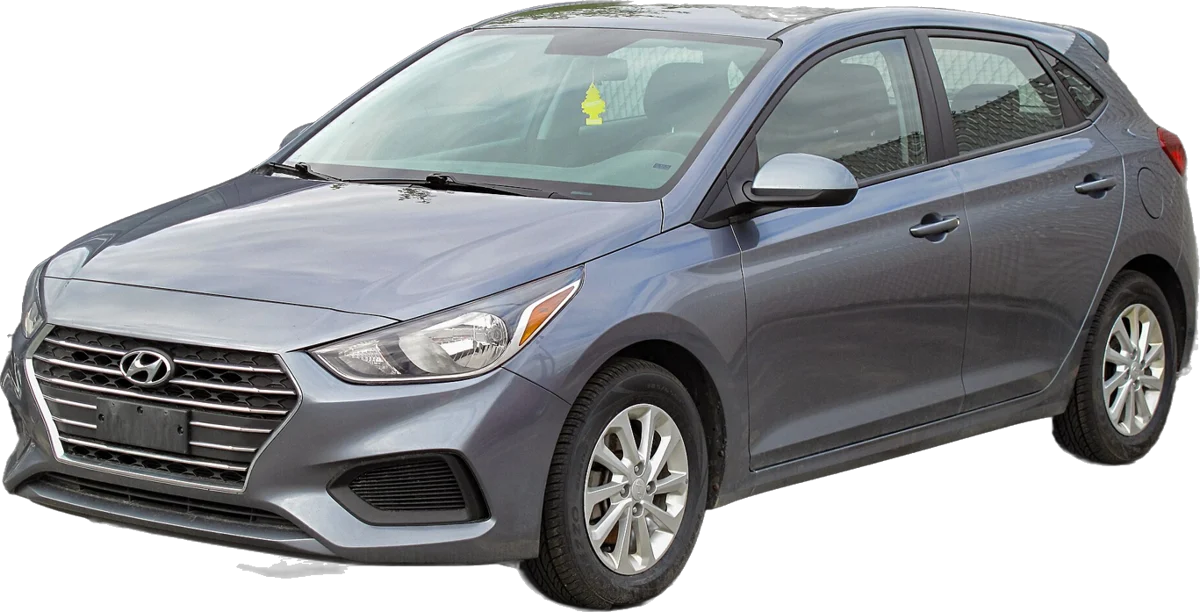
2016 Hyundai Accent.
The 2016 Hyundai Accent is better than average by owner complaints: 39 complaints in its first 3 years and a Lemon Index of 53, where 100 is the average car. Owners complain most about airbags, it has 0 recalls, and it gets 30 to 31 mpg combined. The best Hyundai Accent year is 2014.

Before you buy. What matters most for this car.
How serious. Out of 102 owner complaints, owners reported:
Every Hyundai Accent year. 2016 is highlighted. Lower is better.
What owners complain about most. From owner complaints to the government.
Share of this year's owner complaints filed with NHTSA, not the share of cars that break. One complaint can name more than one area.
When owners reported problems. From owner complaints to the government.
Most owners who filed a complaint with NHTSA had 23K to 91K miles on the car (51 complaints listed the miles). This shows when people who had a problem reported it, not the odds that your car will have it.
Recalls 0
No safety recalls on record.
Recall repairs are free at any dealer. A recall only matters if it's still open on that exact car, so check its VIN.
Problems Hyundai told dealers about
Hyundai sent dealers 77 repair notes for this car. The ones about its biggest problems:
- Before installing an automatic transmission, check the depth of the torque converter in the…
- Check engine warning light with the following
Ask a seller or mechanic if these were done. Some are free under warranty or a special program.
Safety

Crash test details
| Version | Overall | Front | Side | Rollover |
|---|---|---|---|---|
| Hyundai Accent 4 DR FWD | ★★★★☆ | ★★★★☆ | ★★★★☆ | ★★★★☆ |
| Hyundai Accent 5 5 HB FWD | ★★★★☆ | ★★★★☆ | ★★★★☆ | ★★★★☆ |
Fuel cost and engines
About $2050–2150 a year in fuel (EPA estimate). Engines: 1.6L 4-cyl.
In owners' words
I was in a front end collison, 45 mph, my air bag did not deploy.. I was moving on a hwy.
2016 Hyundai Accent owner · NHTSA complaint 10990843
More owner reports
When the car turns over, the brake, traction control, and abs light stays on, the speedometer doesn't move when in motion and the fuel range switches numbers while in motion
NHTSA complaint 11246078
The airbag light illuminated on cluster.it appears and disapear.sometimes it remains steady.
NHTSA complaint 11267318
Quick answers
Is the 2016 Hyundai Accent reliable?
Yes, better than average by government complaints. It drew 1.9× fewer complaints than average filed with NHTSA in its first 3 years, per car sold (Lemon Index 53; 100 is average, lower is better). The best Hyundai Accent year by this measure is 2014.
What are the most common 2016 Hyundai Accent problems?
In owner complaints to the government, the parts named most are airbags (33%), electrical (26%) and engine (15%). That is the share of complaints, not the share of cars that break.
How many recalls does the 2016 Hyundai Accent have?
None: NHTSA has no safety recalls on record for it.
What gas mileage does the 2016 Hyundai Accent get?
30 to 31 mpg combined, depending on the engine (EPA estimate).
Is the 2016 Hyundai Accent safe?
NHTSA gave it 4 out of 5 stars overall in its best tested version. Ratings differ by body style, and the full table is on the advanced page.
At what mileage do 2016 Hyundai Accent problems start?
Half of the owners who gave a mileage reported the problem between 23,100 and 91,400 miles. The middle report was at 50,000 miles, from 51 complaints.
Does the 2016 Hyundai Accent have transmission problems?
Transmission and drivetrain issues aren't among its top 5 complaint areas.
How much does the 2016 Hyundai Accent cost in fuel a year?
About $2050 to $2150 a year, by the EPA's current estimate.
What engines does the 2016 Hyundai Accent have?
1.6L 4-cyl.
What Hyundai Accent year is better than the 2016?
By owner complaints per car sold, the best recent years are 2014, 2018 and 2019.
Lemon Index = safety complaints filed with the U.S. government (NHTSA) in a car's first 3 years, per car sold, against the average car of the same model year. 100 is average; lower is better. A complaint is an owner's report, not a confirmed defect. How it works