 The Lemon Index
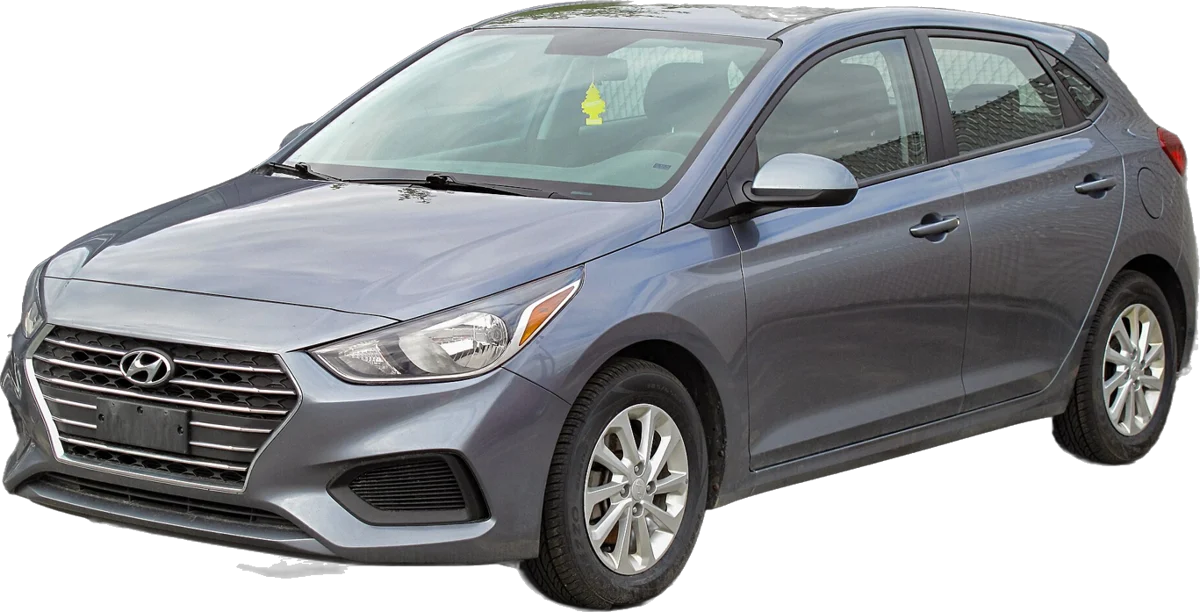
2006 Hyundai Accent.
The 2006 Hyundai Accent has too few complaints to score: 13 in its first 3 years. Owners complain most about airbags, it has 3 recalls, and it gets 28 to 29 mpg combined. The best Hyundai Accent year is 2014.

Before you buy. What matters most for this car.
How serious. Out of 43 owner complaints, owners reported:
Older model year: fewer owners filed complaints back then, so treat the score as rough.
Every Hyundai Accent year. 2006 is highlighted. Lower is better.
What owners complain about most. From owner complaints to the government.
Share of this year's owner complaints filed with NHTSA, not the share of cars that break. One complaint can name more than one area.
When owners reported problems. From owner complaints to the government.
Most owners who filed a complaint with NHTSA had 37K to 89K miles on the car (39 complaints listed the miles). This shows when people who had a problem reported it, not the odds that your car will have it.
- airbags complaints mostly came at 43K–95K miles
Recalls 3
- lights 2013
Originally, in April 2013, Hyundai recalled 1,059,824 model year 2007-2009 Accent and Tucson, model year 2007-2010 Elantra, model year 2007-2011 Santa Fe, model year 2008-2009 Veracruz, model year 2010-2011 Genesis Coupe…
- lights 2009
HYUNDAI IS RECALLING 3,011 MODEL YEAR 2005-2007 ELANTRA, TUCSON, SONATA, AZERA AND ACCENT VEHICLES.
- lights 2009
HYUNDAI IS RECALLING 532,633 MY 2006-2007 ACCENT, ENTOURAGE, SONATA, MY 2007 AZERA, ELANTRA AND SANTA FE, MY 2005-2007 TUCSON AND MY 2007-2008 VERACRUZ VEHICLES.
Recall repairs are free at any dealer. A recall only matters if it's still open on that exact car, so check its VIN.
Problems Hyundai told dealers about
Hyundai sent dealers 37 repair notes for this car. The ones about its biggest problems:
- This bulletin provides information for inspecting and replacing front or rear wheel bearing…
- The National Highway Traffic Safety Administration (NHTSA) has identified the presence of…
Ask a seller or mechanic if these were done. Some are free under warranty or a special program.
Government investigations
- ClosedStop lamp switch failure2009
NHTSA looks into a problem when enough owners report it. Many end in a recall.
Safety
Crash stars (older test): front ★★★★★ · side ★★★★☆ · rollover ★★★★☆

Fuel cost and engines
About $2200–2300 a year in fuel (EPA estimate). Engines: 1.6L 4-cyl.
In owners' words
Recall on my brake light (don't have any)stop working 2 days a go been waiting for call back.
2006 Hyundai Accent owner · NHTSA complaint 10291147
Quick answers
Is the 2006 Hyundai Accent reliable?
There isn't enough data to score it: owners filed only 13 complaints in its first 3 years.
What are the most common 2006 Hyundai Accent problems?
In owner complaints to the government, the parts named most are airbags (46%), lights (15%) and visibility (8%). That is the share of complaints, not the share of cars that break.
How many recalls does the 2006 Hyundai Accent have?
3 safety recalls (latest: lights). Recall repairs are free at any dealer; check a specific car's VIN at nhtsa.gov/recalls.
What gas mileage does the 2006 Hyundai Accent get?
28 to 29 mpg combined, depending on the engine (EPA estimate).
At what mileage do 2006 Hyundai Accent problems start?
Half of the owners who gave a mileage reported the problem between 37,000 and 89,000 miles. The middle report was at 61,000 miles, from 39 complaints.
Does the 2006 Hyundai Accent have transmission problems?
Transmission and drivetrain issues aren't among its top 5 complaint areas.
How much does the 2006 Hyundai Accent cost in fuel a year?
About $2200 to $2300 a year, by the EPA's current estimate.
What engines does the 2006 Hyundai Accent have?
1.6L 4-cyl.
What Hyundai Accent year is better than the 2006?
By owner complaints per car sold, the best recent years are 2014, 2018 and 2019.
Lemon Index = safety complaints filed with the U.S. government (NHTSA) in a car's first 3 years, per car sold, against the average car of the same model year. 100 is average; lower is better. A complaint is an owner's report, not a confirmed defect. How it works