 The Lemon Index
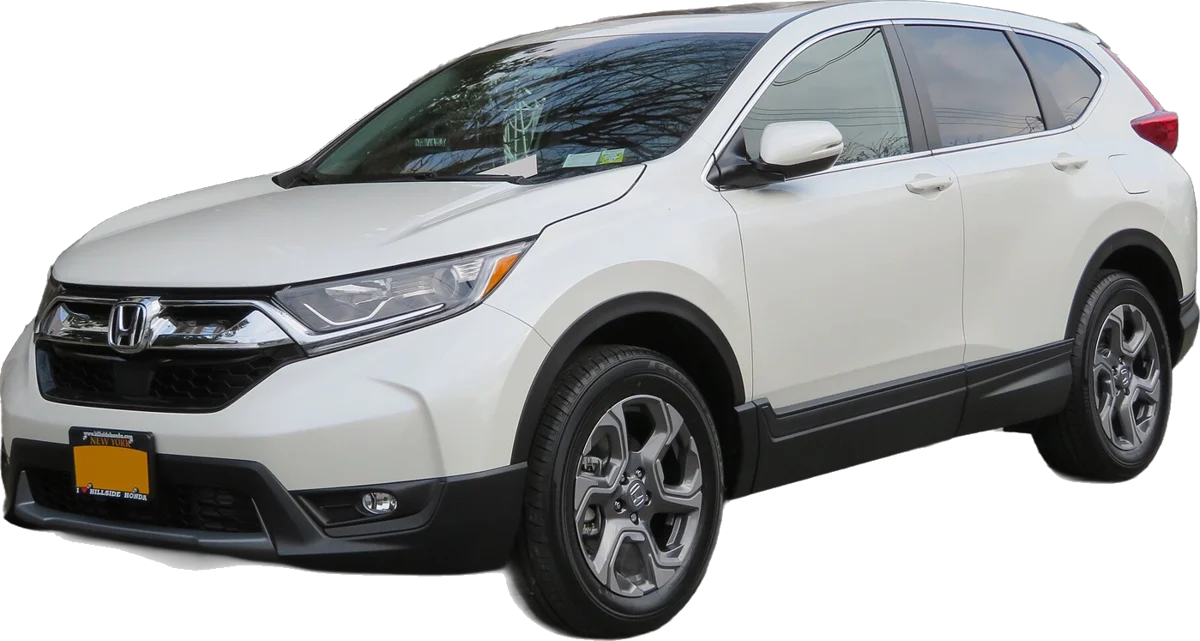
2003 Honda CR-V.
The 2003 Honda CR-V is worse than average by owner complaints: 154 complaints in its first 3 years and a Lemon Index of 130, where 100 is the average car. Owners complain most about engine, it has 14 recalls, and it gets 21 to 22 mpg combined. The best Honda CR-V year is 2001.

Before you buy. What matters most for this car.
How serious. Out of 468 owner complaints, owners reported:
Older model year: fewer owners filed complaints back then, so treat the score as rough.
Every Honda CR-V year. 2003 is highlighted. Lower is better.
What owners complain about most. From owner complaints to the government.
Share of this year's owner complaints filed with NHTSA, not the share of cars that break. One complaint can name more than one area.
When owners reported problems. From owner complaints to the government.
Most owners who filed a complaint with NHTSA had 32K to 113K miles on the car (329 complaints listed the miles). This shows when people who had a problem reported it, not the odds that your car will have it.
- airbags complaints mostly came at 27K–141K miles
- engine complaints mostly came at 20K–80K miles
- electrical complaints mostly came at 57K–131K miles
Recalls 14
- visibility 2020
Moisture may enter the driver side power window master switch, causing the switch to fail or melt.
- airbags 2019
The vehicles are equipped with passenger frontal air bag inflators assembled as a recall remedy part or replacement service part, that may explode due to propellant degradation occurring after long-term exposure to high …
- airbags 2019
These vehicles are equipped with driver frontal air bag inflators assembled as a recall remedy part or replacement service part, that may explode due to propellant degradation occurring after long-term exposure to high a…
Show all 14 recalls
- airbags 2019
The affected vehicles received a replacement driver air bag inflator as part of a previous Takata inflator recall remedy or a replacement driver air bag module containi.
- airbags 2018
The front passenger air bag may have been installed incorrectly during replacement.
- airbags 2015
In the event of a crash necessitating deployment of the passenger's frontal air bag, the inflator could rupture with metal fragments striking the passenger seat occupant or other occupants possibly causing serious injury…
- airbags 2015
The affected vehicles are equipped with a dual-stage driver frontal air bag that may be susceptible to moisture intrusion and other factors, including manufacturing variability that, over time, could cause the inflator t…
- airbags 2014
Specifically, vehicles sold, or ever registered, in Alabama, Florida, Georgia, Hawaii, Louisiana, Mississippi, South Carolina, Texas, Puerto Rico, U.S.
- airbags 2014
American Honda Motor Company, Inc.'s (Honda) is conducting a limited regional recall for certain model year 2003-2005 Accord, Civic, CR-V, Pilot and Acura MDX, model year 2003-2004 Odyssey and Element, and model year 200…
- electrical 2012
The driver-side power window switch may fail or melt.
- lights 2012
HONDA IS RECALLING CERTAIN MODEL YEAR 2002 THROUGH 2004 CR-V; MODEL YEAR 2003 THROUGH 2005 PILOT; AND MODEL YEAR 2002 AND 2003 CIVIC VEHICLES.
- visibility 2007
CERTAIN CURVED TEMPERED REPLACEMENT GLASS MANUFACTURED BY HANGZHOU SAFETY GLASS LTD AND SUPPLIED TO SAFELITE BY AUTO TEMP INC., IDENTIFIED AS DOT-430, AND SOLD FOR USE ON CERTAIN DOMESTIC AND FOREIGN VEHICLES MAY NOT BRE…
- airbags 2004
ON CERTAIN SPORT UTILITY VEHICLES, THE WIRE HARNESS OF THE DRIVER'S FRONT AIR BAG WAS INCORRECTLY WIRED.
- transmission & drivetrain 2003
ON CERTAIN SPORT UTILITY VEHICLES EQUIPPED WITH AUTOMATIC TRANSMISSIONS, EXCESSIVE CORROSION OF THE SHIFT CABLE LINKAGE COULD PREVENT THE DRIVER FROM SHIFTING THE AUTOMATIC TRANSMISSION INTO PARK.
Recall repairs are free at any dealer. A recall only matters if it's still open on that exact car, so check its VIN.
Problems Honda told dealers about
Honda sent dealers 209 repair notes for this car. The ones about its biggest problems:
- Engine stumbles or stalls after a stop
- Engine-cranks won't start, immobilizer light flashes
- Snapping, cracking noise after shutting engine off
Ask a seller or mechanic if these were done. Some are free under warranty or a special program.
Government investigations
- OpenDesiccated air bag inflator rupture2021
- OpenAir bag inflator rupture2015
- ClosedAir bag inflator rupture2014–2015
- ClosedDriver's power window master switch2011–2012
NHTSA looks into a problem when enough owners report it. Many end in a recall.
Safety
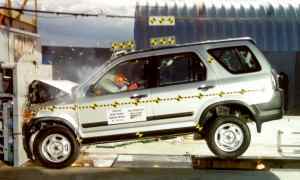
Crash stars (older test): front ★★★★★ · side ★★★★★ · rollover ★★★☆☆
Fuel cost and engines
About $2900–3050 a year in fuel (EPA estimate). Engines: 2.4L 4-cyl.
In owners' words
Faulty emissions sensor shortly after the warranty was up. 2003 Honda crv has 38,000 miles on it. Had to pay for the labor. Was able to get dealer to get the manufacturer to pay for the part.
2003 Honda CR-V owner · NHTSA complaint 10134347
More owner reports
Fax e-mail from (mt) re defective computer in their 2003 Honda crv, causes the engine light to come on.
NHTSA complaint 10153016
Recall campaign' crv-v srs cable reel connector. Consumer feel Honda should provide service back home and to pick up car.
NHTSA complaint 10111415
Quick answers
Is the 2003 Honda CR-V reliable?
No, it is worse than average by government complaints. It drew 1.3× the average car's complaints filed with NHTSA in its first 3 years, per car sold (Lemon Index 130; 100 is average, lower is better). The best Honda CR-V year by this measure since 2010 is 2011.
What are the most common 2003 Honda CR-V problems?
In owner complaints to the government, the parts named most are engine (27%), airbags (14%) and brakes (8%). That is the share of complaints, not the share of cars that break.
How many recalls does the 2003 Honda CR-V have?
14 safety recalls (latest: visibility). Recall repairs are free at any dealer; check a specific car's VIN at nhtsa.gov/recalls.
What gas mileage does the 2003 Honda CR-V get?
21 to 22 mpg combined, depending on the engine (EPA estimate).
At what mileage do 2003 Honda CR-V problems start?
Half of the owners who gave a mileage reported the problem between 32,400 and 113,000 miles. The middle report was at 68,500 miles, from 329 complaints.
Does the 2003 Honda CR-V have transmission problems?
Transmission and drivetrain issues make up 8% of its owner complaints.
How much does the 2003 Honda CR-V cost in fuel a year?
About $2900 to $3050 a year, by the EPA's current estimate.
What engines does the 2003 Honda CR-V have?
2.4L 4-cyl.
What Honda CR-V year is better than the 2003?
By owner complaints per car sold, the best recent years are 2011, 2010 and 2013.
Lemon Index = safety complaints filed with the U.S. government (NHTSA) in a car's first 3 years, per car sold, against the average car of the same model year. 100 is average; lower is better. A complaint is an owner's report, not a confirmed defect. How it works