 The Lemon Index
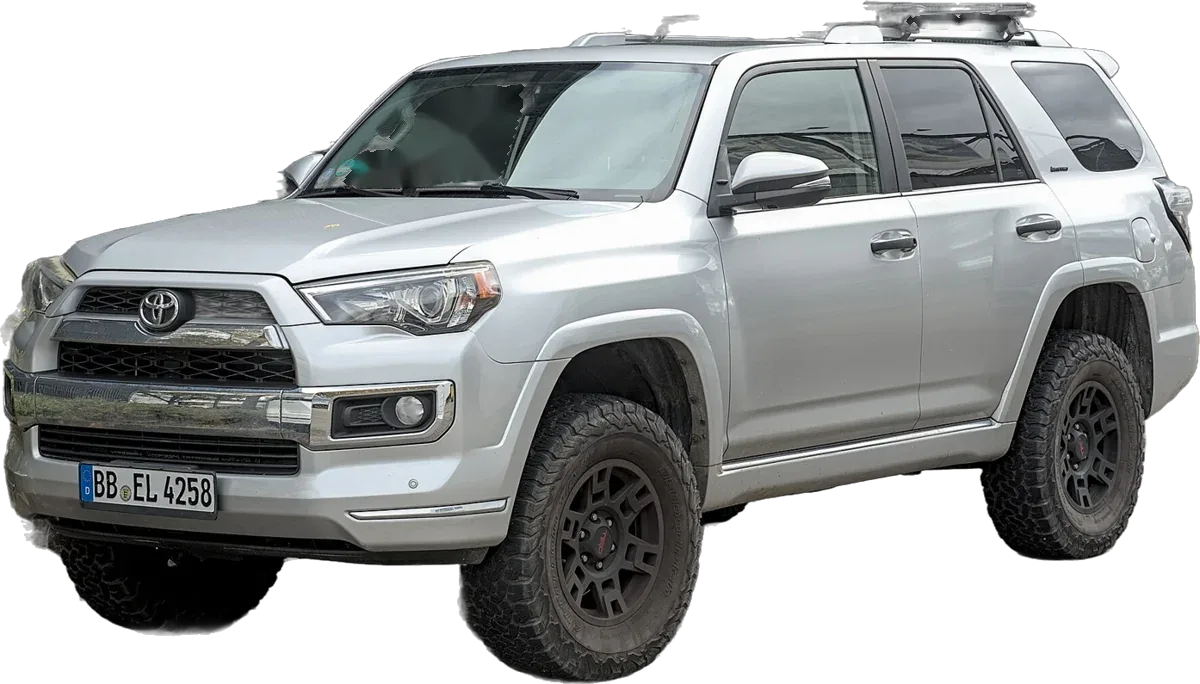
2003 Toyota 4Runner.
The 2003 Toyota 4Runner is worse than average by owner complaints: 172 complaints in its first 3 years and a Lemon Index of 193, where 100 is the average car. Owners complain most about engine, it has 3 recalls, and it gets 15 to 18 mpg combined. The best Toyota 4Runner year is 2013.
Worse than average. 1.9× the average car's complaints.
Best year 2013

Before you buy. What matters most for this car.
How serious. Out of 696 owner complaints, owners reported:
Older model year: fewer owners filed complaints back then, so treat the score as rough.
Every Toyota 4Runner year. 2003 is highlighted. Lower is better.
What owners complain about most. From owner complaints to the government.
Share of this year's owner complaints filed with NHTSA, not the share of cars that break. One complaint can name more than one area.
When owners reported problems. From owner complaints to the government.
Most owners who filed a complaint with NHTSA had 45K to 156K miles on the car (469 complaints listed the miles). This shows when people who had a problem reported it, not the odds that your car will have it.
- body structure complaints mostly came at 103K–180K miles
- suspension complaints mostly came at 100K–184K miles
- engine complaints mostly came at 0K–20K miles
Recalls 3
- speed control 2011
TOYOTA IS RECALLING CERTAIN MODEL YEAR 2008 THROUGH 2011 LEXUS LX570, 2003 THROUGH 2009 TOYOTA 4RUNNER, AND 2006 THROUGH 2010 RAV4 VEHICLES.
- fuel system, gasoline 2003
ON CERTAIN SPORT UTILITY VEHICLES EQUIPPED WITH V6 ENGINES, THE FUEL PULSATION DAMPER, LOCATED ON THE FUEL RAIL, MAY HAVE BEEN IMPROPERLY ASSEMBLED, CAUSING A DIAPHRAGM IN THE PULSATION DAMPER TO BE DAMAGED.
- wheels 2002
ON CERTAIN SPORT UTILITY VEHICLES EQUIPPED WITH FIVE FACTORY ALLOY WHEELS (MODEL 6934 AND 6936), WITH FACTORY LLAT, AND WITH PORT INSTALLED WR4, FOUR ALLOY WHEEL UPGRADE PROCESSED AT THE JACKSONVILLE, FLORIDA PORT AND DI…
Recall repairs are free at any dealer. A recall only matters if it's still open on that exact car, so check its VIN.
Problems Toyota told dealers about
Toyota sent dealers 245 repair notes for this car. The ones about its biggest problems:
- Countermeasures to the air conditioner (a/c) magnetic clutch relay for a/c light flashing…
- Information on installing manual transmission shift lever or park neutral position switch
- Accelerator pedal sensor assembly information regarding the inspection, removal, and…
Ask a seller or mechanic if these were done. Some are free under warranty or a special program.
Government investigations
- ClosedFrame corrosion2018–2022
- ClosedUnintended and uncontrolled acceleration2010–2011
NHTSA looks into a problem when enough owners report it. Many end in a recall.
Safety
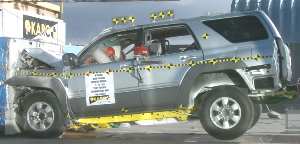
Crash stars (older test): front ★★★★☆ · side ★★★★★ · rollover ★★★☆☆
Fuel cost and engines
About $3550–4300 a year in fuel (EPA estimate). Engines: 4.0L 6-cyl, 4.7L 8-cyl.
In owners' words
Foul smelling exhaust - ammonia smell - very strong on accelerations uphill or freeway on ramps.
2003 Toyota 4Runner owner · NHTSA complaint 10155849
More owner reports
The vehicle was distributing excessive amounts of sulfur dioxide gas from the exhaust pipe . The gas was coming through the air vents and making the occupants sick.
NHTSA complaint 10017800
Exhaust fumes seeped into the passenger cabin while driving.
NHTSA complaint 10014952
Quick answers
Is the 2003 Toyota 4Runner reliable?
No, it is worse than average by government complaints. It drew 1.9× the average car's complaints filed with NHTSA in its first 3 years, per car sold (Lemon Index 193; 100 is average, lower is better). The best Toyota 4Runner year by this measure is 2013.
What are the most common 2003 Toyota 4Runner problems?
In owner complaints to the government, the parts named most are engine (47%), transmission & drivetrain (11%) and seats (10%). That is the share of complaints, not the share of cars that break.
How many recalls does the 2003 Toyota 4Runner have?
3 safety recalls (latest: speed control). Recall repairs are free at any dealer; check a specific car's VIN at nhtsa.gov/recalls.
What gas mileage does the 2003 Toyota 4Runner get?
15 to 18 mpg combined, depending on the engine (EPA estimate).
At what mileage do 2003 Toyota 4Runner problems start?
Half of the owners who gave a mileage reported the problem between 45,200 and 156,000 miles. The middle report was at 106,000 miles, from 469 complaints.
Does the 2003 Toyota 4Runner have transmission problems?
Transmission and drivetrain issues make up 11% of its owner complaints.
How much does the 2003 Toyota 4Runner cost in fuel a year?
About $3550 to $4300 a year, by the EPA's current estimate.
What engines does the 2003 Toyota 4Runner have?
4.0L 6-cyl, 4.7L 8-cyl.
What Toyota 4Runner year is better than the 2003?
By owner complaints per car sold, the best recent years are 2013, 2017 and 2021.
Lemon Index = safety complaints filed with the U.S. government (NHTSA) in a car's first 3 years, per car sold, against the average car of the same model year. 100 is average; lower is better. A complaint is an owner's report, not a confirmed defect. How it works