 The Lemon Index
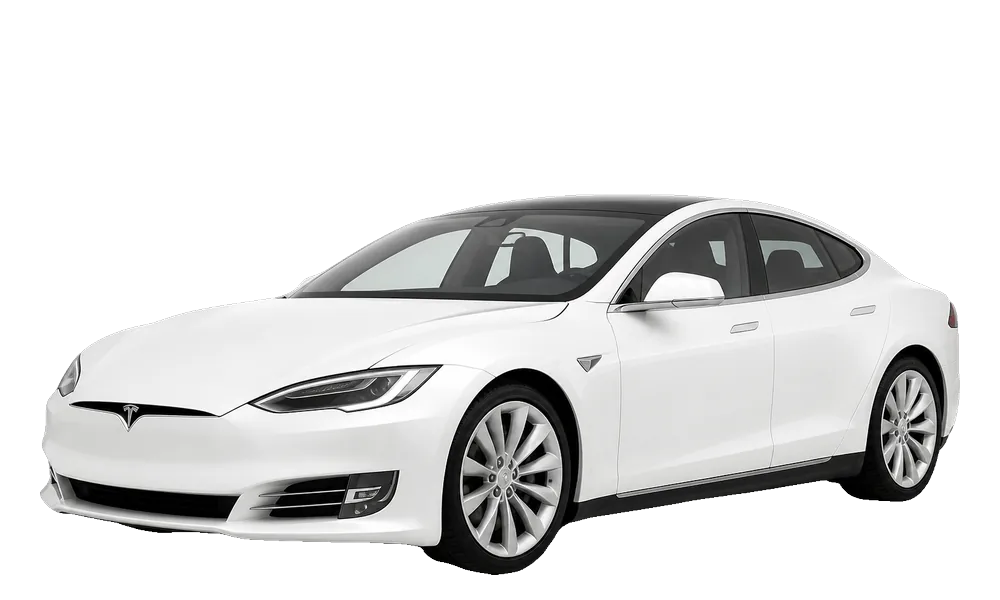 20192021
Complaints only. Tesla doesn't report U.S. sales by model, and no estimate covers this model year on its own, so there's no per-car score. Owners filed 62 complaints in its first 3 years.
Better years to buy
62 owner complaints, first 3 years 97–117 MPGe combined, EPA
Similar cars, same year
2020 Lexus ES 122020 BMW 5 Series 182020 Mercedes-Benz E-Class 36
Lemon Index: 100 = the average car, lower is better.
When problems show up
Most problems on this year showed up between 990 and 6,500 miles (1,600–10,000 km) (the middle half of the 21 complaints, of all 62 filed so far, that listed a mileage).
- At 60K, 100K and 150K miles (97K, 161K and 241K km) Past the range where most problems showed up: it has likely had them or dodged them, so repair records matter most.
This is when owners who had a problem reported it, not the odds that one car will have it.
Questions to ask the seller
- Were recalls 24V376000 (seat belts), 24V153000 (automatic emergency braking) and 24V051000 (electrical) done? It has 11 recalls in all. Ask for the dealer printout, or check the VIN.
- Has it ever braked hard for no reason? Ask whether the safety-system software was updated.
- Any clunks over bumps or uneven tire wear? Were struts, shocks or control arms replaced?
- Any steering noise, wander or power-steering warning? Has the steering rack or pump been replaced?
From this year's own recalls, top problems, top repair bills and Tesla's repair notes. Recall repairs are free at any dealer.
How serious. Out of all 62 owner complaints filed so far (every year since it was sold, not just the first 3), owners reported:
“Average car” = what the same number of complaints would include at the rate across every model year we track. Owners report these themselves; NHTSA doesn't confirm the cause.
What owners complain about most. From owner complaints to the government.
Share of this year's owner complaints filed with NHTSA, not the share of cars that break. One complaint can name more than one area.
Check engine light on? Look up any code →
When owners reported problems. From owner complaints to the government.
Most owners who filed a complaint with NHTSA had 0K to 6K miles (2K to 10K km) on the car (21 of all 62 complaints filed so far listed the miles). This shows when people who had a problem reported it, not the odds that your car will have it.
In owners' words
Front axel vibrations and noises. Tesla unable to fix.
2020 Tesla Model S owner · NHTSA complaint 11509212
More owner reports
the car when the autopilot is on sometimes will Phantom Brake out of nowhere at high speeds in the highway. almost creating a coalition with the cars in the back.
NHTSA complaint 11452533
Suspension front end items became loose at 33k miles.Front Tire was at risk and did rub against drivers side front fender liner
NHTSA complaint 11444767
Recalls 11
- Seat belts · recall issued 2024
In the event of an unbelted driver, the seat belt warning light and audible chime may not activate as intended.
- Automatic emergency braking · recall issued 2024
A factory reset muted the Pedestrian Warning System (PWS) sounds.
- Electrical · recall issued 2024
An incorrect font size is displayed on the instrument panel for the Brake, Park, and Antilock Brake System (ABS) warning lights.
Show all 11 recalls
- Electrical · recall issued 2023
In certain circumstances when Autosteer is engaged, the prominence and scope of the feature's controls may not be sufficient to prevent driver misuse of the SAE Level 2 advanced driver-assistance feature.
- Steering · recall issued 2023
The FSD Beta system may allow the vehicle to act unsafe around intersections, such as traveling straight through an intersection while in a turn-only lane, entering a stop sign-controlled intersection without coming to a…
- Steering · recall issued 2022
The electronic power assist steering (EPAS) system may experience a loss of power steering assist when driving on rough roads or after hitting a pothole.
- Electrical · recall issued 2022
The Boombox function allows sounds to be played through an external speaker while the vehicle is in motion, which may obscure the Pedestrian Warning System (PWS) sounds.
- Electrical · recall issued 2022
The Boombox function allows sounds to be played through an external speaker while the vehicle is in motion, which may obscure the Pedestrian Warning System (PWS) sounds.
- Electrical · recall issued 2022
The "rolling stop" functionality available as part of the Full Self-Driving (Beta) software may allow the vehicle to travel through an all-way stop intersection without first coming to a stop.
- Latches/locks/linkages · recall issued 2021
The front trunk latch assembly may be misaligned, preventing the secondary hood latch from engaging.
- Automatic emergency braking · recall issued 2021
A communication error may cause false forward-collision warning (FCW) or unexpected activation of the automatic emergency brake (AEB) system.
Recall repairs are free at any dealer. A recall only matters if it's still open on that exact car, so check its VIN.
Canada? See recalls at Transport Canada
Crash test details
| Version | Overall | Front | Side | Rollover |
|---|---|---|---|---|
| Tesla Model 3 4 DR RWD | ★★★★★ | ★★★★★ | ★★★★★ | ★★★★★ |
| Tesla Model 3 4 DR AWD | ★★★★★ | ★★★★★ | ★★★★★ | ★★★★★ |
| Tesla Model S (All Variants) 5 HB AWD | not rated | not rated | not rated | ★★★★★ |
Fuel cost and engines
About $650–$800 (USD) a year in electricity (EPA estimate at U.S. prices, 15,000 miles or 24,000 km a year).
Every Tesla Model S year. 2020 is highlighted. Lower is better.
Newest year first. Red = worse than average, gray = about average, too new (2023+: a partial score, marked “partial”) or too few complaints to score.
Quick answers
Is the 2020 Tesla Model S reliable?
We can't score it: Tesla doesn't report U.S. sales by model, and no estimate covers this model year on its own, so there is no per-car rate. Owners filed 62 complaints with NHTSA in its first 3 years.
What are the most common 2020 Tesla Model S problems?
In owner complaints to the government, the parts named most are automatic emergency braking (40%), suspension (18%) and steering (15%). That is the share of complaints, not the share of cars that break.
How many recalls does the 2020 Tesla Model S have?
11 safety recalls (latest: seat belts). Recall repairs are free at any dealer; check a specific car's VIN at nhtsa.gov/recalls.
Is the 2020 Tesla Model S safe?
NHTSA gave it 5 out of 5 stars overall in its best tested version. Ratings differ by body style, and the full table is on the advanced page.
At what mileage do 2020 Tesla Model S problems show up?
Most problems on this year showed up between 990 and 6,500 miles (1,600–10,000 km) (the middle half of the 21 complaints, of all 62 filed so far, that listed a mileage). At 60K, 100K and 150K miles, a 2020 is past the range where most problems showed up: it has likely had them or dodged them, so repair records matter most. This is when owners who had a problem reported it, not a prediction for one car.
Does the 2020 Tesla Model S have transmission problems?
Transmission and drivetrain issues aren't among its top 5 complaint areas.
How much does the 2020 Tesla Model S cost in fuel a year?
About $650 to $800 a year, by the EPA's current estimate.
What Tesla Model S year is better than the 2020?
Nearby, the 2022 drew fewer owner complaints per car sold (about 3 times the average car's complaints).
The Lemon Index counts owner complaints filed with the U.S. government (NHTSA) in a car's first 3 years, per car sold, against the average car of the same model years (100 = average, lower is better). It measures complaints, not crash safety. A complaint is an owner's report, not a confirmed defect. How it works