 The Lemon Index
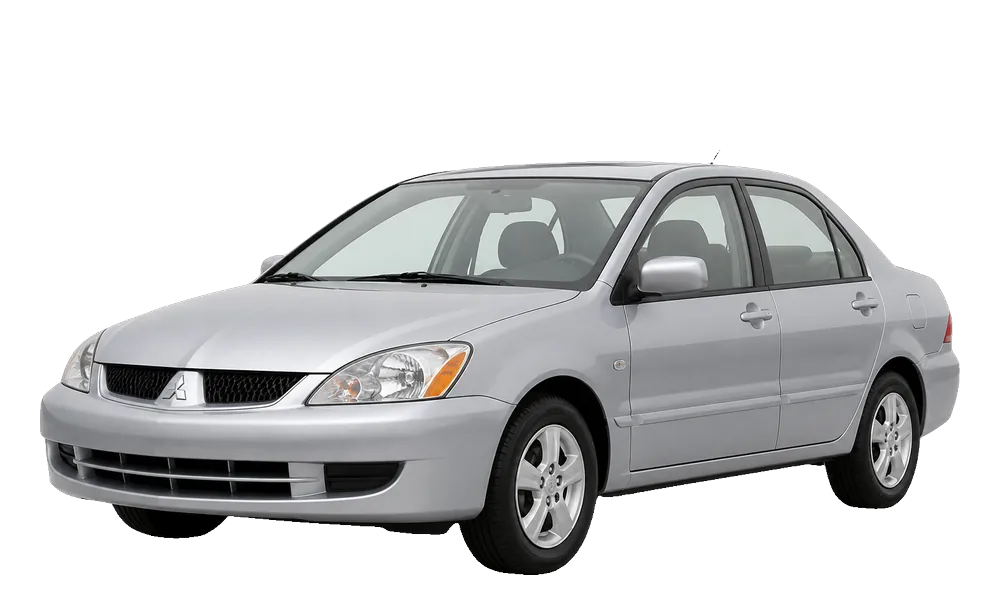 2006
7th generation
Not enough data. Only 16 complaints in its first 3 years: too few to score.
Better years to buy
16 owner complaints, first 3 years 19–26 mpg combined, EPA
Similar cars, same year
2005 Honda Civic 402005 Toyota Corolla 382005 Hyundai Elantra 62
Lemon Index: 100 = the average car, lower is better.
Engines & versions
When problems show up
Only 11 complaints listed a mileage: too few to say when problems show up.
Questions to ask the seller
- Were recalls 18V220000 (airbags), 17V569000 (airbags) and 16V458000 (suspension) done? It has 7 recalls in all. Ask for the dealer printout, or check the VIN.
- NHTSA has an open investigation into air bag inflator rupture. Has this car had that problem?
- Do the brakes feel even, with no ABS or brake warning light? When were the pads and brake fluid last done?
- Any steering noise, wander or power-steering warning? Has the steering rack or pump been replaced?
- Is the airbag light off, and were any airbag recalls done?
- Mitsubishi sent dealers 93 repair notes for this car. Was this one done: “Sport pedal installation tools”?
From this year's own recalls, top problems, top repair bills and Mitsubishi's repair notes. Recall repairs are free at any dealer.
How serious. Out of all 16 owner complaints filed so far (every year since it was sold, not just the first 3), owners reported:
“Average car” = what the same number of complaints would include at the rate across every model year we track. Owners report these themselves; NHTSA doesn't confirm the cause.
What owners complain about most. From owner complaints to the government.
Share of this year's owner complaints filed with NHTSA, not the share of cars that break. One complaint can name more than one area.
Check engine light on? Look up any code →
When owners reported problems. From owner complaints to the government.
Most owners who filed a complaint with NHTSA had 7K to 20K miles (11K to 32K km) on the car (11 of all 16 complaints filed so far listed the miles). This shows when people who had a problem reported it, not the odds that your car will have it.
In owners' words
Front bearings are loose causing erratic steering, premature tire wear and premature brake wear.
2005 Mitsubishi Lancer owner · NHTSA complaint 10149328
More owner reports
Turned warped brake rotor. Problem came back, unsafe to drive due to poor handling when braking.
NHTSA complaint 10178574
Fixes owners look up most.
From 200 YouTube videos · 20.5M views · 2002–2007 Mitsubishi Lancer
Most-watched topics
- Steering & suspension309K views
 Wheel Bearing Replacement - Part 1 [2002 Mitsubishi Lancer]MattsMotorz · 226K views · 4 videos
- Spark plugs & ignition coils294K views
 How to replace ignition coils, Spark Plugs and wires 2002 Mitsubishi LancerMicah G Robinson · 166K views · 3 videos
- Death wobble & steering284K views
 AC, Power steering, Serpentine belt replacement Mitsubishi Lancer ES 2005em7th · 203K views · 2 videos
- Transmission & shifter151K views
 Mitsubishi Lancer 2003 ES - Quick Auto Transmission Fluid ChangeKong Chang · 74K views · 4 videos
Show 2 more


Before you buy, watch
 Mitsubishi lancer 2003 problemsMarlon _ · 39K views
 Regular Car Reviews: 2006 Mitsubishi Lancer Evolution MRRegular Car Reviews · 1.0M views
 Review: 2006 Mitsubishi Lancer Evolution IX MRMatt Maran Motoring · 630K views
Views show how many people looked up each fix, not how often it breaks. Videos belong to their creators; we link to them. The 2005 is the same generation.
Costs are the middle (median) of the dollar amounts people say out loud in these videos, so one wild number can't swing it. They aren't verified bills or sales; real prices depend on year, miles, condition and where you live. Tap Hear it to jump to the moment.
Problems Mitsubishi told dealers about
Mitsubishi sent dealers 93 repair notes for this car. The ones about its biggest problems:
- Sport pedal installation tools
- Rear brake noise
- Premature water pump failure
Ask a seller or mechanic if these were done. Some are free under warranty or a special program.
Recalls 7
- Airbags · recall issued 2018
Also recalled are 2004-2006 Lancer vehicles located in Guam or Saipan that previously received or never received a new inflator under 15V321 or 17V569.
- Airbags · recall issued 2017
These vehicles are equipped with a passenger side frontal air bag that may be susceptible to moisture intrusion which, over time, could cause the inflator to rupture.
- Suspension · recall issued 2016
In the affected vehicles, the front lower control arms may detach due to the front cross me.
Show all 7 recalls
- Lights · recall issued 2009
DECREASED LIGHTING VISIBILITY MAY RESULT IN A VEHICLE CRASH.
- Lights · recall issued 2006
CERTAIN TRADESONIC COMBINATION LAMPS SOLD AS REPLACEMENT LAMPS FOR USE ON THE ABOVE LISTED PASSENGER VEHICLES.
- Lights · recall issued 2006
CERTAIN ANZO COMBINATION HEADLAMP ASSEMBLIES SOLD AS REPLACEMENT LAMPS FOR USE ON CERTAIN PASSENGER VEHICLES.
- Engine · recall issued 2005
ON CERTAIN PASSENGER VEHICLES, THE TURBO CHARGER COOLANT HOSE WAS INCORRECTLY MANUFACTURED, AND MAY ALLOW COOLANT LEAKAGE.
Recall repairs are free at any dealer. A recall only matters if it's still open on that exact car, so check its VIN.
Canada? See recalls at Transport Canada
Every Mitsubishi Lancer recall, all years · All Mitsubishi recalls
Government investigations
- OpenAir bag inflator rupture2015
- ClosedAir bag inflator rupture2014–2015
NHTSA looks into a problem when enough owners report it. Many end in a recall.
Safety
Crash stars (older test): front ★★★★☆ · side ★★☆☆☆ · rollover ★★★★☆

Fuel cost and engines
About $2,300–$3,950 (USD) a year in fuel (EPA estimate at U.S. prices, 15,000 miles or 24,000 km a year). Engines: 2.0L 4-cyl, 2.4L 4-cyl.
Every Mitsubishi Lancer year. 2005 is highlighted. Lower is better.
Show 4 older years (2002–2007, YouTube reviews only, no complaint data)
Newest year first. Red = worse than average, gray = about average or too few complaints to score. #1, #2… = that year's YouTube rank among the 9 Mitsubishi Lancer years with enough videos (#1 = the year owners and reviewers talk about most positively). It is not a reliability rank.
Embed this chart
Put this chart on your site, blog or forum. Free, with the credit line built in; the 2005 bar is highlighted.
<iframe src="https://lemonindex.com/embed/cars/mitsubishi-lancer/?y=2005" title="Mitsubishi Lancer reliability by model year (The Lemon Index)" width="100%" height="307" style="border:0;max-width:720px" loading="lazy"></iframe><p style="font-size:13px;margin:4px 0 0">Data: <a href="https://lemonindex.com/cars/mitsubishi-lancer/2005/">Lemon Index</a> (2005 Mitsubishi Lancer reliability)</p>Quick answers
Is the 2005 Mitsubishi Lancer reliable?
There isn't enough data to score it: owners filed only 16 complaints in its first 3 years.
What are the most common 2005 Mitsubishi Lancer problems?
In owner complaints to the government, the parts named most are brakes (19%), steering (19%) and airbags (12%). That is the share of complaints, not the share of cars that break.
How many recalls does the 2005 Mitsubishi Lancer have?
7 safety recalls (latest: airbags). Recall repairs are free at any dealer; check a specific car's VIN at nhtsa.gov/recalls.
What gas mileage does the 2005 Mitsubishi Lancer get?
19 to 26 mpg combined, depending on the engine (EPA estimate).
Does the 2005 Mitsubishi Lancer have transmission problems?
Transmission and drivetrain issues make up 12% of its owner complaints.
How much does the 2005 Mitsubishi Lancer cost in fuel a year?
About $2,300 to $3,950 a year, by the EPA's current estimate.
What engines does the 2005 Mitsubishi Lancer have?
2.0L 4-cyl, 2.4L 4-cyl.
What Mitsubishi Lancer year is better than the 2005?
Nearby, the 2008 drew fewer owner complaints per car sold (somewhat fewer complaints than the average car). Across every year, 2010 drew the fewest.
The Lemon Index counts owner complaints filed with the U.S. government (NHTSA) in a car's first 3 years, per car sold, against the average car of the same model years (100 = average, lower is better). It measures complaints, not crash safety. A complaint is an owner's report, not a confirmed defect. How it works