 The Lemon Index
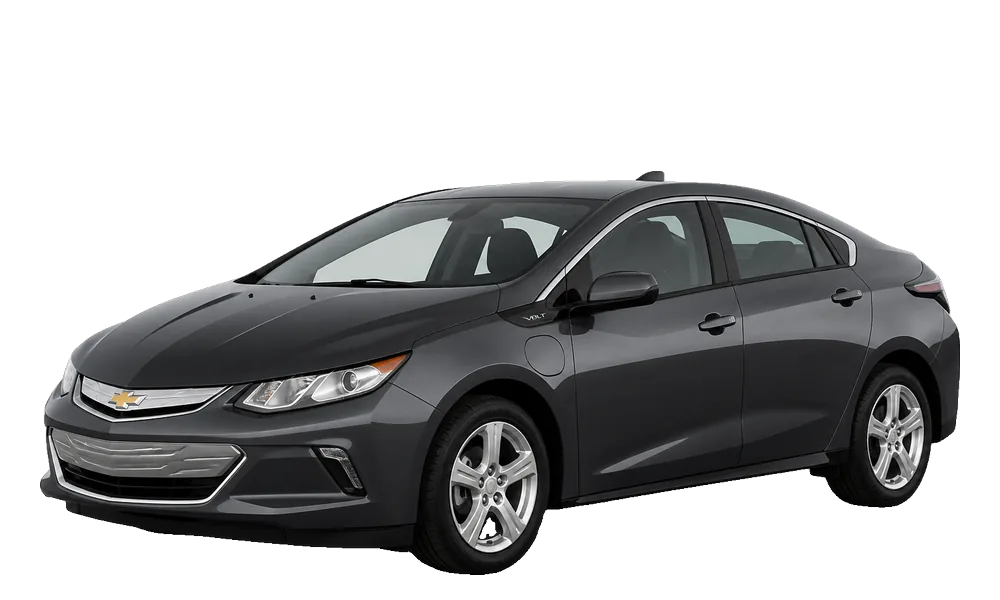 20172019
Complaints only. Too few sold to score: 18,306 in the U.S. in 2018 (sales source), under the 20,000 a fair per-car score needs. Owners filed 64 complaints in its first 3 years.
Better years to buy
64 owner complaints, first 3 years 42 mpg combined, EPA
Similar cars, same year
2018 Toyota Prius 252018 Chevrolet Bolt2018 Tesla Model 3
Lemon Index: 100 = the average car, lower is better.
What breaks most on the 2018 Chevrolet Volt
- Throttle body / loss of power17 complaints
- Engine stalling13 complaints
Specific parts named in the 228 owner complaints filed with NHTSA for the 2018 Chevrolet Volt (all dates). Miles = the odometer owners typed in (middle half); cost = the repair bills owners wrote in those same complaints, in U.S. dollars. Owners' reports, not confirmed defects.
When problems show up
Most problems on this year showed up between 8,400 and 30,000 miles (13,000–48,000 km) (the middle half of the 39 complaints, of all 64 filed so far, that listed a mileage).
- At 60K, 100K and 150K miles (97K, 161K and 241K km) Past the range where most problems showed up: it has likely had them or dodged them, so repair records matter most.
This is when owners who had a problem reported it, not the odds that one car will have it.
Questions to ask the seller
- Were recalls 18V673000 (seat belts) and 18V576000 (brakes) done? Ask for the dealer printout, or check the VIN.
- Any slipping, hard or late shifts, or a transmission warning light? Ask for transmission fluid service records.
- Do all the lights, screens and power features work? Has the battery, alternator or any wiring been replaced?
- Any oil burning, leaks or check-engine lights? Ask for oil-change records.
- Any check-engine light, exhaust smell or rattle underneath? Ask whether the catalytic converter was replaced. (19 owners named a exhaust & emissions repair bill; the middle one was $2,800.)
From this year's own recalls, top problems, top repair bills and Chevy's repair notes. Recall repairs are free at any dealer.
How serious. Out of all 64 owner complaints filed so far (every year since it was sold, not just the first 3), owners reported:
“Average car” = what the same number of complaints would include at the rate across every model year we track. Owners report these themselves; NHTSA doesn't confirm the cause.
What owners complain about most. From owner complaints to the government.
Share of this year's owner complaints filed with NHTSA, not the share of cars that break. One complaint can name more than one area.
Transmission problems in every Chevrolet Volt year →
Check engine light on? Codes owners of the Chevrolet Volt (2016–2020) name most: P1E00 · P0401 Exhaust Gas Recirculation A Flow Insufficient Detected. Look up any code →
When owners reported problems. From owner complaints to the government.
Most owners who filed a complaint with NHTSA had 8K to 30K miles (13K to 48K km) on the car (39 of all 64 complaints filed so far listed the miles). This shows when people who had a problem reported it, not the odds that your car will have it.
In owners' words
The vehicle has more consistently failed to turn off the display keep seeing shift to park and it's happening with more frequency.
2018 Chevrolet Volt owner · NHTSA complaint 11353080
More owner reports
When car is in park the vehicle sometimes does not recognize that and will not let you turn the car off. The display tells you that you need to shift to park but it is already in park. The problem is happening frequently now.
NHTSA complaint 11427251
Will not shut off when transmission shifted to park.
NHTSA complaint 11406778
What repairs cost
Repair bills owners named in their complaints to the government (NHTSA), 2016–2019 Chevrolet Volt, in U.S. dollars.
- Exhaust & emissionsone repair bill$1,800–$3,600middle $2,800 · 19 owners named a bille.g. NHTSA complaints 11632222, 11595437, 11714210
- Electricalone repair bill$566–$3,300middle $1,200 · 16 owners named a bille.g. NHTSA complaints 11558097, 11208002, 11450803
- Engineone repair bill$2,000–$2,700middle $2,500 · 5 owners named a bille.g. NHTSA complaints 11639391, 11723689, 11583256
Not enough reports yet for a number: Airbags (2), Screen, radio & camera (1), Transmission (1). We show a range once 5 owners name a bill.
Each range is the middle half of the bills owners wrote down (one repair, parts and labor as they said it), not a yearly or total cost. Owners who complain often had expensive repairs, so typical bills can be lower. Prices depend on the shop, the miles and where you live.
Fixes owners look up most.
From 200 YouTube videos · 7.9M views · 2016–2019 Chevrolet Volt
Most-watched topics
- Infotainment, battery & electrical137K views
 DIY: 2016-2019 CHEVY VOLT -12 Volt AGM Battery Replacement!Sterling W · 49K views · 6 videos
- Oil changes & service61K views
 2016 Chevrolet Volt Connected Services and Apple Car Play DemonstrationJavier Mota · 44K views · 2 videos
- Intake, EGR & engine sensors55K views
 ⚡ 2nd Gen Chevy Volt EGR Cooler Cleaning Hack — No Removal RequiredBlackWater MotorWerks · 14K views · 8 videos
- Cooling system21K views
 DIY: 2016-17 Chevy VOLT - Coolant Check and Top off.Sterling W · 21K views
Show 4 more
- Transmission & shifter21K views
 2nd Gen Chevy Volt Shifter Replacement - Shift To Park Issue Solved.Covet the Camper · 21K views
- Brakes & ABS19K views
 2nd Gen Chevrolet Volt ABS Stabilitrak fixAbuzar Baloach · 10K views · 3 videos
- Spark plugs & ignition coils15K views
 2016-2020 Chevy Volt Spark Plug Change (@ 100,000 miles) Chevy Volt Vlog #73Sterling W · 12K views · 2 videos
- Heat, A/C & blend door5K views
 2017-2019 Chevy Volt No heat in EV mode - heater unit and heater coolant pump replacementHybrid and Electric Car Sales · 5K views
Before you buy, watch
 2017 Chevrolet Volt LT Buyers Guide and InfoINFINITI of Tacoma at Fife · 5K views
 Chevy Volt 2017 Problems 3Joshua Snyder-Hill · 4K views
 Chevy Volt 2017 ProblemsJoshua Snyder-Hill · 4K views
Views show how many people looked up each fix, not how often it breaks. Videos belong to their creators; we link to them. The 2018 is the same generation.
Costs are the middle (median) of the dollar amounts people say out loud in these videos, so one wild number can't swing it. They aren't verified bills or sales; real prices depend on year, miles, condition and where you live. Tap Hear it to jump to the moment.
Recalls 2
- Seat belts · recall issued 2018
Certain second-row or third-row rear seatbelts retractor assemblies may not automatically lock when the seatbelt is fully pulled out of the retractor, possibly preventing a child seat from being properly secured.
- Brakes · recall issued 2018
The rear brake caliper pistons may have an insufficient coating causing gas pockets to form, potentially reducing rear brake performance.
Recall repairs are free at any dealer. A recall only matters if it's still open on that exact car, so check its VIN.
Canada? See recalls at Transport Canada
Every Chevrolet Volt recall, all years · All Chevrolet recalls
Crash test details
| Version | Overall | Front | Side | Rollover |
|---|---|---|---|---|
| Chevrolet Volt 5 HB FWD | ★★★★★ | ★★★★★ | ★★★★★ | ★★★★★ |
Fuel cost and engines
About $1,550 (USD) a year in fuel (EPA estimate at U.S. prices, 15,000 miles or 24,000 km a year). Engines: 1.5L 4-cyl.
Every Chevrolet Volt year. 2018 is highlighted. Lower is better.
Newest year first. Red = worse than average, gray = about average or too few complaints to score. #1, #2… = that year's YouTube rank among the 4 Chevrolet Volt years with enough videos (#1 = the year owners and reviewers talk about most positively). It is not a reliability rank.
Embed this chart
Put this chart on your site, blog or forum. Free, with the credit line built in; the 2018 bar is highlighted.
<iframe src="https://lemonindex.com/embed/cars/chevrolet-volt/?y=2018" title="Chevrolet Volt reliability by model year (The Lemon Index)" width="100%" height="307" style="border:0;max-width:720px" loading="lazy"></iframe><p style="font-size:13px;margin:4px 0 0">Data: <a href="https://lemonindex.com/cars/chevrolet-volt/2018/">Lemon Index</a> (2018 Chevrolet Volt reliability)</p>Quick answers
Is the 2018 Chevrolet Volt reliable?
We can't score it: only 18,306 were sold in the U.S. in 2018 (calendar-year sales), under the 20,000 we need for a fair per-car score. Owners filed 64 complaints with NHTSA in its first 3 years.
What are the most common 2018 Chevrolet Volt problems?
In owner complaints to the government, the parts named most are transmission & drivetrain (47%), electrical (38%) and engine (17%). That is the share of complaints, not the share of cars that break.
How many recalls does the 2018 Chevrolet Volt have?
2 safety recalls (latest: seat belts). Recall repairs are free at any dealer; check a specific car's VIN at nhtsa.gov/recalls.
What gas mileage does the 2018 Chevrolet Volt get?
42 mpg combined, depending on the engine (EPA estimate).
Is the 2018 Chevrolet Volt safe?
NHTSA gave it 5 out of 5 stars overall in its best tested version. Ratings differ by body style, and the full table is on the advanced page.
At what mileage do 2018 Chevrolet Volt problems show up?
Most problems on this year showed up between 8,400 and 30,000 miles (13,000–48,000 km) (the middle half of the 39 complaints, of all 64 filed so far, that listed a mileage). At 60K, 100K and 150K miles, a 2018 is past the range where most problems showed up: it has likely had them or dodged them, so repair records matter most. This is when owners who had a problem reported it, not a prediction for one car.
Does the 2018 Chevrolet Volt have transmission problems?
Transmission and drivetrain issues make up 47% of its owner complaints.
How much does the 2018 Chevrolet Volt cost in fuel a year?
About $1,550 a year, by the EPA's current estimate.
What engines does the 2018 Chevrolet Volt have?
1.5L 4-cyl.
What Chevrolet Volt year is better than the 2018?
Nearby, the 2016 drew fewer owner complaints per car sold (somewhat fewer complaints than the average car).
The Lemon Index counts owner complaints filed with the U.S. government (NHTSA) in a car's first 3 years, per car sold, against the average car of the same model years (100 = average, lower is better). It measures complaints, not crash safety. A complaint is an owner's report, not a confirmed defect. How it works