 The Lemon Index
All carsChevroletAvalanche2012
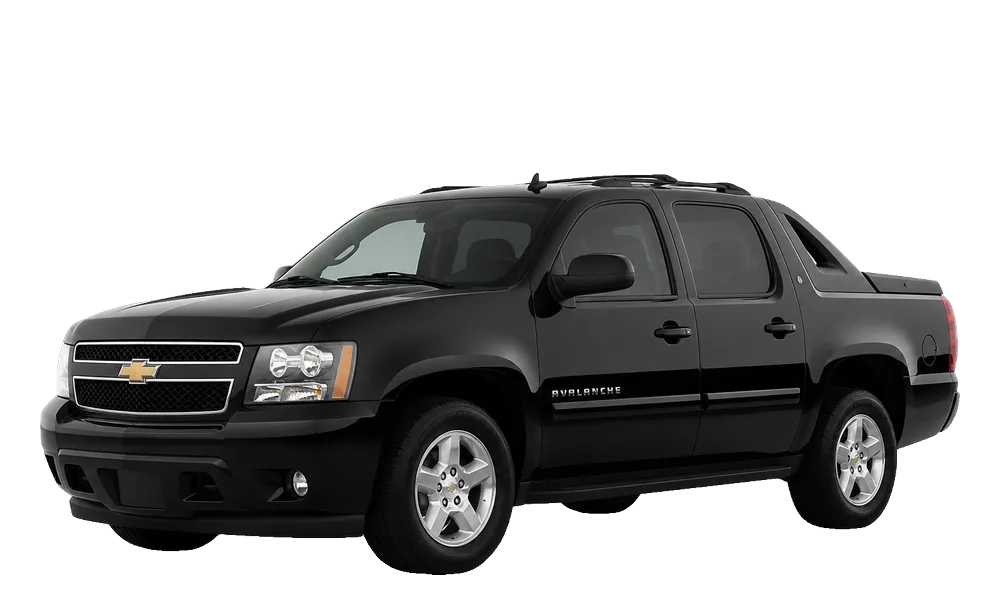 20112013
2nd generation
One of the most reliable · most complaints: body structure
Fewest complaints of its generation (2nd generation).
12 owner complaints, first 3 years 17 mpg combined, EPA
Similar cars, same year
2012 Ford F-150 992012 Chevrolet Silverado 142012 Ram 1500 190
Lemon Index: 100 = the average car, lower is better.
Engines & versions
When problems show up
Only 11 complaints listed a mileage: too few to say when problems show up.
Questions to ask the seller
- Were recalls 21V054000 (airbags), 21V051000 (airbags) and 14V827000 (electrical) done? Ask for the dealer printout, or check the VIN.
- NHTSA has an open investigation into desiccated air bag inflator rupture. Has this car had that problem?
- Any rust or damage underneath, or doors and hatches that don't close right?
- Any slipping, hard or late shifts, or a transmission warning light? Ask for transmission fluid service records.
- Any steering noise, wander or power-steering warning? Has the steering rack or pump been replaced?
- Chevy sent dealers 1612 repair notes for this car. Was this one done: “The front or rear door may not open from the inside or outside handle, the door will not…”?
From this year's own recalls, top problems, top repair bills and Chevy's repair notes. Recall repairs are free at any dealer.
How serious. Out of all 12 owner complaints filed so far (every year since it was sold, not just the first 3), owners reported:
“Average car” = what the same number of complaints would include at the rate across every model year we track. Owners report these themselves; NHTSA doesn't confirm the cause.
What owners complain about most. From owner complaints to the government.
Share of this year's owner complaints filed with NHTSA, not the share of cars that break. One complaint can name more than one area.
Check engine light on? Look up any code →
When owners reported problems. From owner complaints to the government.
Most owners who filed a complaint with NHTSA had 3K to 54K miles (5K to 87K km) on the car (11 of all 12 complaints filed so far listed the miles). This shows when people who had a problem reported it, not the odds that your car will have it.
Problems Chevy told dealers about
Chevy sent dealers 1612 repair notes for this car. The ones about its biggest problems:
- The front or rear door may not open from the inside or outside handle, the door will not…
- The transmission is slipping or has no forward/reverse movement
- Reservoir for power steering fluid is heat damaged and leaking
Ask a seller or mechanic if these were done. Some are free under warranty or a special program.
Recalls 3
- Airbags · recall issued 2021
An inflator explosion may result in sharp metal fragments striking the driver or other occupants, resulting in serious injury or death.
- Airbags · recall issued 2021
An inflator explosion may result in sharp metal fragments striking the driver or other occupants, resulting in serious injury or death.
- Electrical · recall issued 2014
In the affected vehicles, the ignition lock actuator may bind, making turning the key difficult or causing the ignition to get stuck in the "Start" position.
Recall repairs are free at any dealer. A recall only matters if it's still open on that exact car, so check its VIN.
Canada? See recalls at Transport Canada
Every Chevrolet Avalanche recall, all years · All Chevrolet recalls
Government investigations
- OpenDesiccated air bag inflator rupture2021
NHTSA looks into a problem when enough owners report it. Many end in a recall.
Safety
Crash test details
| Version | Overall | Front | Side | Rollover |
|---|---|---|---|---|
| Chevrolet Avalanche SUV 4WD | not rated | not rated | not rated | ★★★☆☆ |
| Chevrolet Avalanche SUV RWD | not rated | not rated | not rated | ★★★☆☆ |
Fuel cost and engines
About $3,550 (USD) a year in fuel (EPA estimate at U.S. prices, 15,000 miles or 24,000 km a year). Engines: 5.3L 8-cyl.
Every Chevrolet Avalanche year. 2012 is highlighted. Lower is better.
Newest year first. Red = worse than average, gray = about average or too few complaints to score.
Embed this chart
Put this chart on your site, blog or forum. Free, with the credit line built in; the 2012 bar is highlighted.
<iframe src="https://lemonindex.com/embed/cars/chevrolet-avalanche/?y=2012" title="Chevrolet Avalanche reliability by model year (The Lemon Index)" width="100%" height="376" style="border:0;max-width:720px" loading="lazy"></iframe><p style="font-size:13px;margin:4px 0 0">Data: <a href="https://lemonindex.com/cars/chevrolet-avalanche/2012/">Lemon Index</a> (2012 Chevrolet Avalanche reliability)</p>Quick answers
Is the 2012 Chevrolet Avalanche reliable?
Yes, it is one of the most reliable by government complaints. It drew about half as many complaints as the average car filed with NHTSA in its first 3 years, per car sold (Lemon Index 46; 100 is average, lower is better).
What are the most common 2012 Chevrolet Avalanche problems?
In owner complaints to the government, the parts named most are body structure (17%), transmission & drivetrain (17%) and steering (17%). That is the share of complaints, not the share of cars that break.
How many recalls does the 2012 Chevrolet Avalanche have?
3 safety recalls (latest: airbags). Recall repairs are free at any dealer; check a specific car's VIN at nhtsa.gov/recalls.
What gas mileage does the 2012 Chevrolet Avalanche get?
17 mpg combined, depending on the engine (EPA estimate).
Does the 2012 Chevrolet Avalanche have transmission problems?
Transmission and drivetrain issues make up 17% of its owner complaints.
How much does the 2012 Chevrolet Avalanche cost in fuel a year?
About $3,550 a year, by the EPA's current estimate.
What engines does the 2012 Chevrolet Avalanche have?
5.3L 8-cyl.
Is there a better Chevrolet Avalanche year than the 2012?
Not nearby: the 2012 drew the fewest complaints per car sold of the Chevrolet Avalanche years within 3 model years of it.
The Lemon Index counts owner complaints filed with the U.S. government (NHTSA) in a car's first 3 years, per car sold, against the average car of the same model years (100 = average, lower is better). It measures complaints, not crash safety. A complaint is an owner's report, not a confirmed defect. How it works