 The Lemon Index
 2001
2nd generation
About average · most complaints: brakes
102 owner complaints, first 3 years 15–17 mpg combined, EPA
Similar cars, same year
2000 Mazda MPV 1932000 Ford Windstar 1542000 Toyota Sienna 171
Lemon Index: 100 = the average car, lower is better.
When problems show up
Only 16 complaints listed a mileage: too few to say when problems show up.
Questions to ask the seller
- Were recalls 06E043000 (fuel system, gasoline) and 06E026000 (lights) done? Ask for the dealer printout, or check the VIN.
- Do the brakes feel even, with no ABS or brake warning light? When were the pads and brake fluid last done?
- Do all the lights, screens and power features work? Has the battery, alternator or any wiring been replaced?
- Any oil burning, leaks or check-engine lights? Ask for oil-change records.
- Chevy sent dealers 288 repair notes for this car. Was this one done: “Some customers may comment that the security lamp illuminates while driving, the security lamp…”?
From this year's own recalls, top problems, top repair bills and Chevy's repair notes. Recall repairs are free at any dealer.
How serious. Out of all 102 owner complaints filed so far (every year since it was sold, not just the first 3), owners reported:
“Average car” = what the same number of complaints would include at the rate across every model year we track. Owners report these themselves; NHTSA doesn't confirm the cause.
What owners complain about most. From owner complaints to the government.
Share of this year's owner complaints filed with NHTSA, not the share of cars that break. One complaint can name more than one area.
Check engine light on? Look up any code →
When owners reported problems. From owner complaints to the government.
Most owners who filed a complaint with NHTSA had 30K to 63K miles (48K to 101K km) on the car (16 of all 102 complaints filed so far listed the miles). This shows when people who had a problem reported it, not the odds that your car will have it.
In owners' words
While applying brakes vehicle continues to travel. Dealer has been notified. Please provide further informaton.
2000 Chevrolet Astro owner · NHTSA complaint 855777
More owner reports
Intermittently when applying brakes rear wheels lock up and front wheels turn, resulting in poor stopping. Dealer has inspected vehicle.
NHTSA complaint 875918
Brake failure while applying brakes and approaching a stop intersection, and vehicle continued without stopping. Dealer notified, and was unable to duplicate problem.
NHTSA complaint 886775
Problems Chevy told dealers about
Chevy sent dealers 288 repair notes for this car. The ones about its biggest problems:
- Some customers may comment that the security lamp illuminates while driving, the security lamp…
- Some customers may comment on securyty lamp illuminates while driving; the engine cranks but…
- Service engine soon lamp illuminated, incorrect transmission shifts, poor performance of…
Ask a seller or mechanic if these were done. Some are free under warranty or a special program.
Recalls 2
- Fuel system, gasoline · recall issued 2006
CERTAIN REPLACEMENT FUEL FILTERS, FRAM BRAND NAME P/N G3727, WITH DATE CODES X52911 THROUGH X60801 SEQUENTIALLY OR X600141 AND A MEXICO COUNTRY OR ORIGIN MARKING ON THE FUEL FILTER HOUSING MANUFACTURED FROM OCTOBER 18, 2…
- Lights · recall issued 2006
CERTAIN PRO-A MOTORS CORNER LAMPS, TURN SIGNALS, AND HEADLIGHTS SOLD AS REPLACEMENT LAMPS FOR USE ON CERTAIN PASSENGER VEHICLES LISTED ABOVE.
Recall repairs are free at any dealer. A recall only matters if it's still open on that exact car, so check its VIN.
Canada? See recalls at Transport Canada
Safety
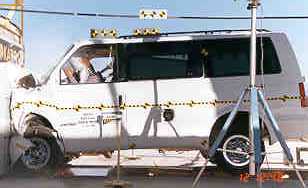
Crash stars (older test): front ★★★☆☆ · side — · rollover —
Fuel cost and engines
About $3,550–$4,000 (USD) a year in fuel (EPA estimate at U.S. prices, 15,000 miles or 24,000 km a year). Engines: 4.3L 6-cyl.
Every Chevrolet Astro year. 2000 is highlighted. Lower is better.
Newest year first. Red = worse than average, gray = about average or too few complaints to score.
Embed this chart
Put this chart on your site, blog or forum. Free, with the credit line built in; the 2000 bar is highlighted.
<iframe src="https://lemonindex.com/embed/cars/chevrolet-astro/?y=2000" title="Chevrolet Astro reliability by model year (The Lemon Index)" width="100%" height="307" style="border:0;max-width:720px" loading="lazy"></iframe><p style="font-size:13px;margin:4px 0 0">Data: <a href="https://lemonindex.com/cars/chevrolet-astro/2000/">Lemon Index</a> (2000 Chevrolet Astro reliability)</p>Quick answers
Is the 2000 Chevrolet Astro reliable?
About average by government complaints. It drew about the average number of complaints filed with NHTSA in its first 3 years, per car sold (Lemon Index 100; 100 is average, lower is better). The Chevrolet Astro year with the fewest complaints per car sold is 2002.
What are the most common 2000 Chevrolet Astro problems?
In owner complaints to the government, the parts named most are brakes (34%), electrical (14%) and engine (13%). That is the share of complaints, not the share of cars that break.
How many recalls does the 2000 Chevrolet Astro have?
2 safety recalls (latest: fuel system, gasoline). Recall repairs are free at any dealer; check a specific car's VIN at nhtsa.gov/recalls.
What gas mileage does the 2000 Chevrolet Astro get?
15 to 17 mpg combined, depending on the engine (EPA estimate).
Does the 2000 Chevrolet Astro have transmission problems?
Transmission and drivetrain issues make up 13% of its owner complaints.
How much does the 2000 Chevrolet Astro cost in fuel a year?
About $3,550 to $4,000 a year, by the EPA's current estimate.
What engines does the 2000 Chevrolet Astro have?
4.3L 6-cyl.
What Chevrolet Astro year is better than the 2000?
Nearby, the 2002 drew fewer owner complaints per car sold (about three-quarters as many complaints as the average car).
The Lemon Index counts owner complaints filed with the U.S. government (NHTSA) in a car's first 3 years, per car sold, against the average car of the same model years (100 = average, lower is better). It measures complaints, not crash safety. A complaint is an owner's report, not a confirmed defect. How it works