 The Lemon Index
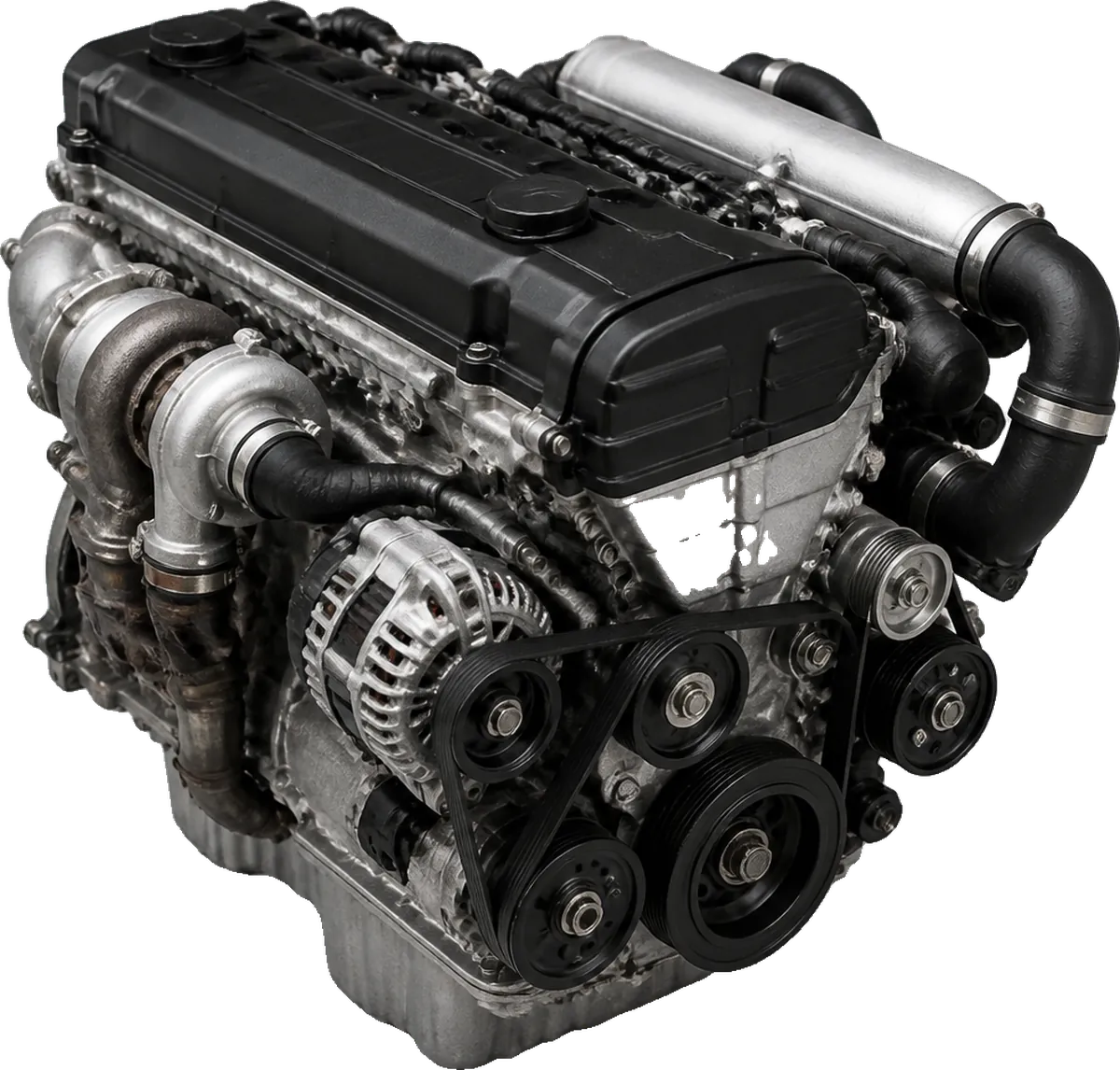
Toyota's 2.0-liter inline-4, DOHC 16-valve, turbocharged and intercooled. This page covers the versions we have sourced so far: the Toyota MR2, model years 1991–1995. The engine is used in other cars too; those aren't covered here yet.
Middle of the pack: YouTube owner tone None/100, #82 of 165 engines with a YouTube study (in the middle third); no engine-related recall on record, 4 known issues listed below.
Known issues on record
- Turbo heat and oil coking (Outlet report). CarThrottle calls the turbo a major sore point: engine-bay heat shortens its life, and non-synthetic oil can coke the turbo bearing. Its buyer’s guides say to check for blue or white smoke at start-up and under boost, and smoke from the dipstick tube. Fix: Use synthetic oil and idle about three minutes after hard driving, as Toyota recommends.
- Cooling system and overheating (Outlet report). CarThrottle says the long cooling system is hard to bleed, and trapped air can cause overheating and a blown head gasket. A coolant hose near the exhaust manifold, nicknamed the hose from hell, can burst around 100,000 miles, and overheating on boost can point to a cracked block. Fix: Have the coolant flushed and bled by someone who knows the car.
- Oil leaks (Outlet report). CarThrottle names the cam cover, distributor O-rings and head gasket as common oil leaks, and says a leak can kill the alternator, which is hard to reach in the tight engine bay.
- Catalyst in the downpipe (Outlet report). On the MR2 Turbo the catalyst is built into the turbo downpipe, and CarThrottle says long high-speed running can damage it.
What YouTube owners say Tone 0-100, higher = more praise than trouble.
Average owner tone 49/100 across 12 model years, from 149 videos about this engine and its cars (#82 of 165 engines with a YouTube study).
Most-watched videos
- Building a 1991 Toyota MR2 Turbo 1,258,849 views
- Regular Car Reviews: 1991 Toyota MR2 SW20 Turbo 1,188,469 views
- Turns out my 'super clean' Toyota MR2 turbo is a piece of .... 1,065,398 views
- Legendary Turbo Cheat - Toyota Celica GT-Four ST-205 747,304 views
- The 1995 Toyota MR2 Turbo Is a Seriously Special Analog Sports Car 692,903 views
Counted from video titles and captions: praise words against trouble words, weighted by views. Videos only count when the title names this engine or a car that had only this engine in those years.
Owner complaints and recalls
Counts for the cars on this page, from NHTSA. They cover every part of the car, not only the engine.
| Car | Years | Owner complaints | Recall campaigns | NHTSA files it as |
|---|---|---|---|---|
| SW20 (W20) MR2 | 1991–1995 | 17 | 1 | Mr2 |
Specs by generation
Toyota 3S-GTE: SW20 (W20) MR2, 1991–1995
- Layout: Inline-4, DOHC 16-valve, air-to-air intercooler (side-mounted in the MR2)
- Output: 200 hp at 6,000 rpm, 200 lb-ft at 3,200 rpm in the US MR2 Turbo; 245 PS (242 hp) in later Japanese MR2s
- Size: 1,998 cc, 86 x 86 mm bore x stroke, 8.8:1 compression (1990–93)
- Turbo: CT26 with a twin-entry turbine housing; a revised CT20b from the 1994 model year
- Timing belt: Non-interference; CarThrottle says change the belt about every 60,000 miles
What we don't have yet
- The engine's other cars: only the versions above are sourced so far.
Quick answers
What cars have the Toyota 3S-GTE engine?
On this site so far: the Toyota MR2, model years 1991–1995. It is used in other cars we haven't covered yet.
Is the Toyota 3S-GTE reliable?
Mostly, with known issues to check. YouTube owner tone None/100, #82 of 165 engines with a YouTube study (in the middle third); no engine-related recall on record, 4 known issues listed below. Owner complaints are filed by car, not engine, and cover the whole car, so none of these numbers is an engine failure rate.
How much horsepower does the Toyota 3S-GTE make?
200 to 242 hp in the versions on this page (factory figures).
Sources: Wikipedia: Toyota S engine · CarThrottle: Used car buying guide: 2nd generation Toyota MR2 Turbo (updated Oct 2024) · CarThrottle: 9 things you need to know before buying an SW20 Toyota MR2 (Matt Robinson, updated Oct 2024). Complaints and recalls: NHTSA (api.nhtsa.gov).